Historical context: This article shares a parent’s experiences in China in September 2017. The app’s aims and the invitation to connect on WeChat below reflect that time.
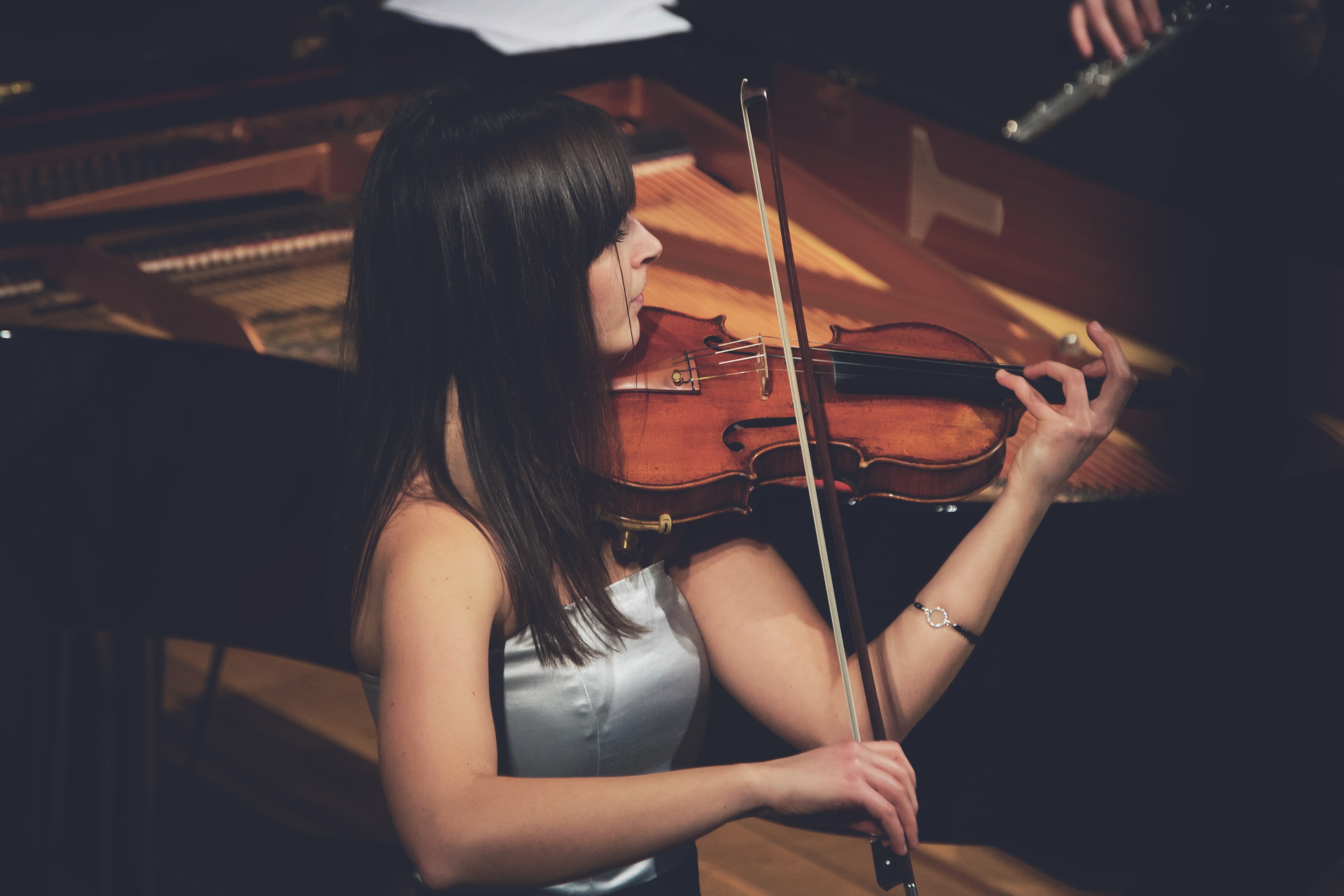
My daughter is learning the violin. As a parent, I have encountered several common questions and developed some thoughts while supporting her practice and learning more myself. I have put them together here to share with you.
1. Progress
Many parents are somewhat impatient for results, expecting their child to pass a particular examination grade within a set period. This is only human: when you pay for lessons, you want to see results.
Generally, teachers can only do their best to accommodate those expectations. In practice, however, the decisive factors in progress rest with the parents themselves: how much the child practices and how effective that practice is.
Why do I say this rests with the parents rather than the child? Practicing an instrument is demanding and complicated for a child. It is almost impossible to rely entirely on children to manage how far they get on their own. Much depends on how parents support their practice. I will leave that topic for now and discuss it in more depth in another article.
Returning to progress, I believe the slower the beginning, the better. A slow start, together with a sufficient amount of practice, can build a solid foundation. Once that foundation is in place, progress can become faster and faster. There is a saying: start fast and slow down later; start slowly and speed up later.
To give a concrete example, my child practices every day, and usually spends one month on a single etude.
2. Posture
The violin is a relatively difficult instrument to learn, and posture can be particularly challenging in the early stages. There is a joke that some people pass Grade 10 in a graded music examination and still sound as though they are sawing wood. Put another way, poor posture can lead to an unpleasant sound.
A teacher offered this explanation: teachers may differ slightly in their requirements for posture, but they broadly agree on the essentials. Establishing correct posture early is very important. Bad habits in holding the bow or supporting the violin can create serious problems later when learning techniques such as shifting to higher positions and spiccato, a bouncing bow stroke.
Posture is therefore something parents need to learn about alongside their child so they can help correct it during practice.
3. The Metronome
Some teachers place considerable emphasis on using a metronome, while others give it less attention.
Even when a teacher emphasizes it, children practicing at home are often reluctant to turn the metronome on, and sometimes simply forget. Their reluctance is easy to understand: the metronome constrains their rhythm, making practice feel more tense.
My child’s teacher takes the metronome very seriously. I often remind my daughter to turn it on when I support her practice, though I sometimes forget too.
While reading a specialist music book, I came across the following passage. It convinced me that a metronome is a necessity rather than an optional extra.
A metronome is an essential tool for practice. I always recommend that musicians use a metronome in their practice throughout their lives. — Passage quoted in the original article from Music at Your Fingertips, translated here from the Chinese edition.
4. Tuning
Many parents do not know how to tune a violin, although it is fairly straightforward once you learn how.
By the time of writing, tuning had become very simple: as nonprofessionals, we do not need to tune by ear. We can simply check each string against a tuner. Smartphones are widely used, and there are plenty of simple, easy-to-use tuner apps.
Why should parents learn to tune?
In my experience, a violin can easily go out of tune because of the nature of the instrument. Its tuning may even change after a single piece has been played.
At the beginning, violin teachers generally tune a child’s instrument at each lesson. In the approach I describe here, intonation is not the main focus at this early stage, so being slightly out of tune during practice at home is not treated as a major issue. The teacher therefore does not necessarily ask the parents to take on the task of tuning.
In reality, unexpected situations arise. An extended visit to one’s hometown, for example, or an accidental drop of the violin can cause a substantial change in its tuning. Parents therefore need to learn how to tune. Here is a small example: a parent I knew in our residential community had a child in fourth grade who had been learning for many years. When a string broke, the parent came to ask me to help replace it. Changing a string and tuning are related tasks.
Once parents have learned to tune, they can ask the teacher to fit a fine tuner to each string. For larger adjustments, the parent can turn the tuning pegs at the top of the violin, which the child cannot yet turn. For small adjustments, the child can use the fine tuners. This provides a gradual transition toward the child tuning independently.
It is important for children to learn to tune their own instruments, because the process also helps them pay attention to intonation. Later, they can even practice tuning by ear without looking at a tuner.
5. Practice Steps
When learning a new piece, the journey from unfamiliarity to familiarity also involves choosing between starting slowly and speeding up later, or starting fast and slowing down later.
Children tend to favor starting fast. They lack patience, and quickly playing through a piece “fluently” is always more encouraging.
In fact, starting a new piece slowly is the way to get better results with less effort.
What does “slowly” mean here? First, sing through the notation rather than rushing to pick up the violin. Once you are familiar with the music through singing, pick up the instrument. Begin by playing as slowly as possible, making sure every note is accurate and the rhythm is as correct as possible. Once you can play it comfortably at a slow tempo without mistakes, gradually move to a slightly faster tempo.
The key is to establish accuracy at a slow tempo first. If you speed up while mistakes remain, you become accustomed to practicing those mistakes, making them harder to correct later. That means more effort for less progress.
Another very important part of slow practice is working in sections. Divide the whole piece into several sections and work through them one at a time. Do not rush to play the entire piece from beginning to end. Master each section, moving from slow to fast.
This process could be made more structured and specific. I will discuss it in detail in another article. Helping parents assess how effective their child’s practice is was something the Violy app aimed to help with at the time of this article.
That is all for now.
In the original 2017 article, interested parents were invited to add the WeChat account LittleQvQ to discuss learning together.