In a recent Violy livestream, we spoke with the mother of a young music student whom everyone calls Mama Yin.
Her daughter, Liu Jingyuan, was 12 years old and in sixth grade at the time of the interview. She was born deaf in both ears.
But she also held another role: associate principal cellist of the Hunan Provincial Youth Chamber Orchestra.
Can a child who has been unable to hear since birth really learn music?
How does she hear whether she is in tune? How does she follow the conductor? How does she coordinate with the orchestra’s other sections?
It sounds almost impossible.
Yet Liu Jingyuan really has made it that far.
In this interview with Mama Yin, we wanted to understand more than how a child learns the cello. We also wanted to know:
How does a family help a child get beyond the barrier of not being able to hear?
And how does a mother gradually turn her initial devastation into the support that lifts her child up?
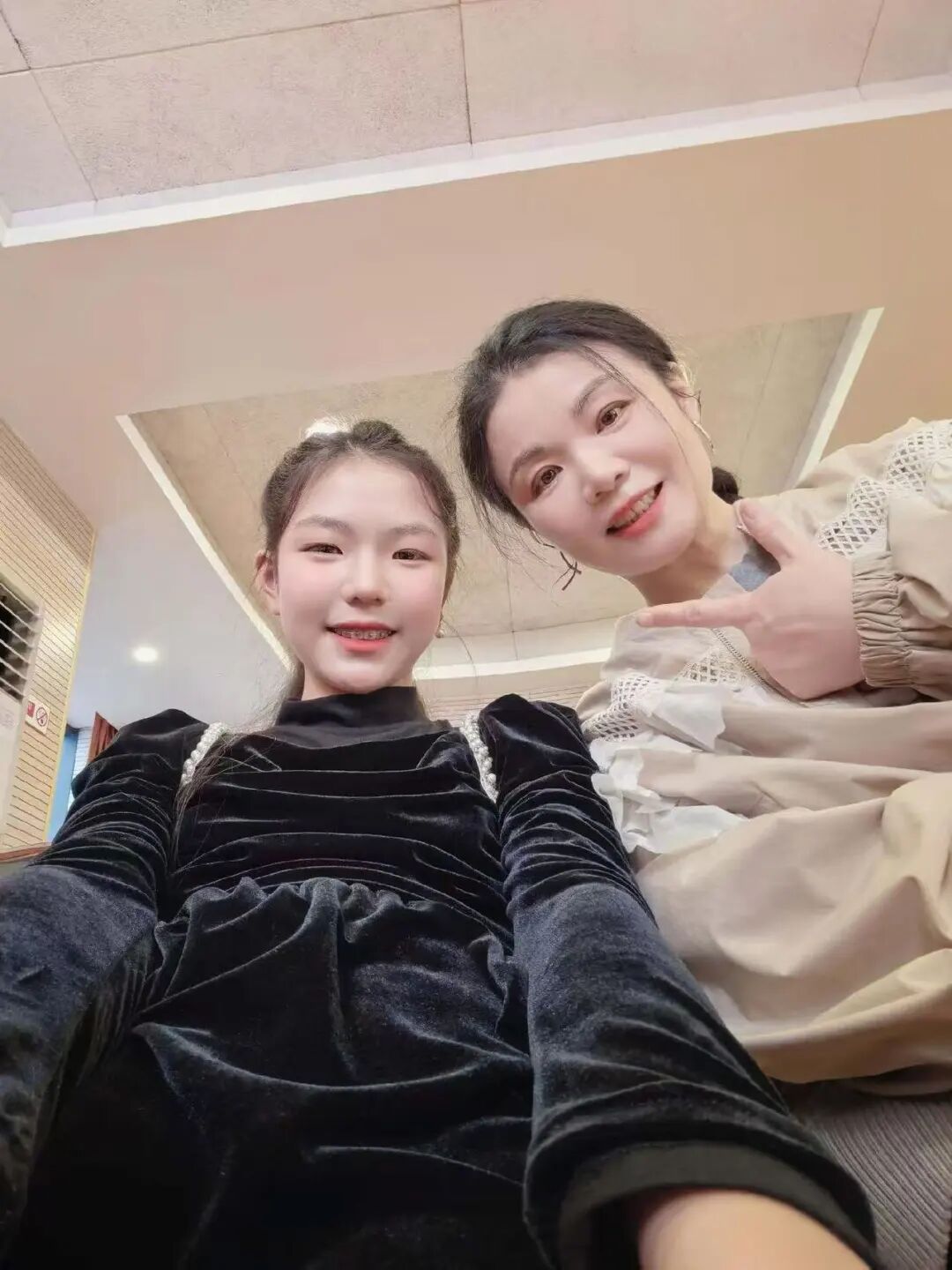
(Left: Jingyuan; right: Mama Yin. Reposted from Mama Yin’s WeChat Moments.)
1. My Daughter, Liu Jingyuan
Liu Jingyuan was 12 at the time of this interview and was born deaf in both ears.
After birth, she repeatedly failed her hearing screenings. At 11 months old, she was finally diagnosed with severe congenital hearing loss in both ears.
At around three years old, she received a cochlear implant, opening a door to the world of sound.
She later studied piano and cello and joined the Hunan Provincial Youth Chamber Orchestra. From the preparatory ensemble to Ensemble B, then Ensemble A, and eventually the associate principal cello position, she gradually stepped into the spotlight.
Mama Yin said she had never hidden her child away.
“Do not avoid the subject. Do not set limits. Do not treat her differently.”
These three choices gradually became the foundation of Liu Jingyuan’s upbringing.
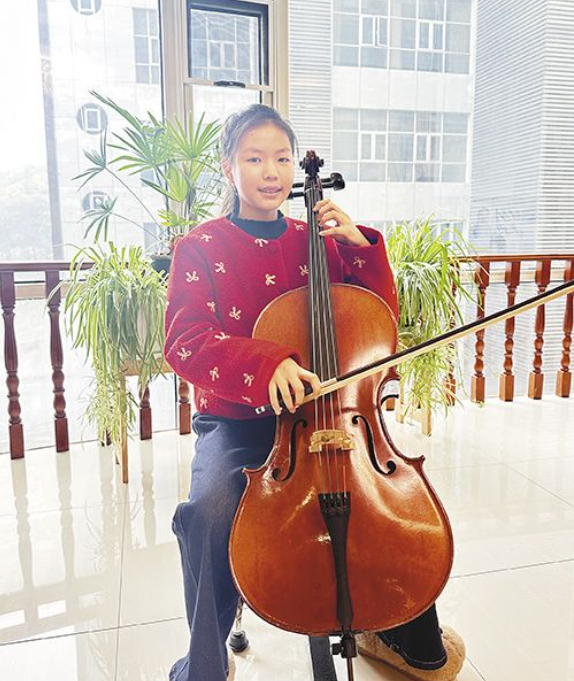
(Image reposted from a state-media article.)
2. On Music and Education
Violy: What did you go through after first discovering that your child might have a hearing problem?
Mama Yin:
“When she was born in hospital, she did not pass her hearing screening. The nurse reassured us that this did not necessarily mean something was wrong: if she passed any one of the follow-up tests, that would mean there was no problem.”
“At forty-something days old, at two months, at three months—she failed every follow-up test. Each time we went full of hope and came back disappointed again.”
“At 11 months, she was diagnosed with congenital deafness in both ears, with severe to profound hearing loss. Of course, we were devastated. It was the darkest moment of my life.”
“Coming home from the hospital, I felt like the walking dead. I got home, shut the door, hid under the quilt, and sobbed.”
“But after that, I never shed another tear. Because I knew my child was still waiting for me.”
Violy: How much can your child hear with a cochlear implant?
Mama Yin:
“I am truly grateful for cochlear implants. Having one is already a very fortunate thing.”
“But there is still a big gap compared with normal hearing. In her experience, the effective listening range is basically within three meters. In public places with background noise, she finds it hard to filter it out. All the sounds come rushing in at once.”
“An ear with normal hearing has roughly two thousand to three thousand auditory nerves, whereas our child’s cochlear implant has only a dozen or so channels. The sounds she hears are very limited. They may sound thin, with parts missing, or incomplete.”
Translator’s note: The interviewee’s figure of 2,000–3,000 “auditory nerves” is retained here as spoken, but it is not an accurate anatomical comparison. Research describes approximately 3,500 inner hair cells in the human cochlea, each connected to multiple auditory nerve fibers; hair cells, nerve fibers, and implant channels are different structures. See Bharadwaj et al., “Cochlear neuropathy and the coding of supra-threshold sound”. The U.S. National Institute on Deafness and Other Communication Disorders explains that cochlear implants stimulate the auditory nerve and do not restore normal hearing. The three-meter range and channel count above describe this family’s reported experience, rather than universal limits for cochlear implants.
“For someone who wears a cochlear implant, simply listening can take all their energy.”
Violy: How did she start learning the cello?
Mama Yin:
“Looking back now, one phrase sums up our decision to learn the cello: ignorance is fearless.”
“For generations, our family had no relatives or friends involved in music or the arts. We knew absolutely nothing about music.”
“When she was eight, she met a violin teacher. The teacher said, ‘Your Jingjing has a good build for it. She is tall, with long arms and legs. She would suit the cello.’”
“I went home and searched for the cello on my phone. What came up was Nana Ouyang playing the cello onstage, looking like a princess. I showed it to my little girl and asked if she wanted to be like that young woman. She said, ‘Yes, yes!’”
“That was how casually we made the decision.”
“Only later did I realize how difficult string instruments are. Even for someone with normal hearing, let alone someone with hearing difficulties, I think they are incredibly difficult.”
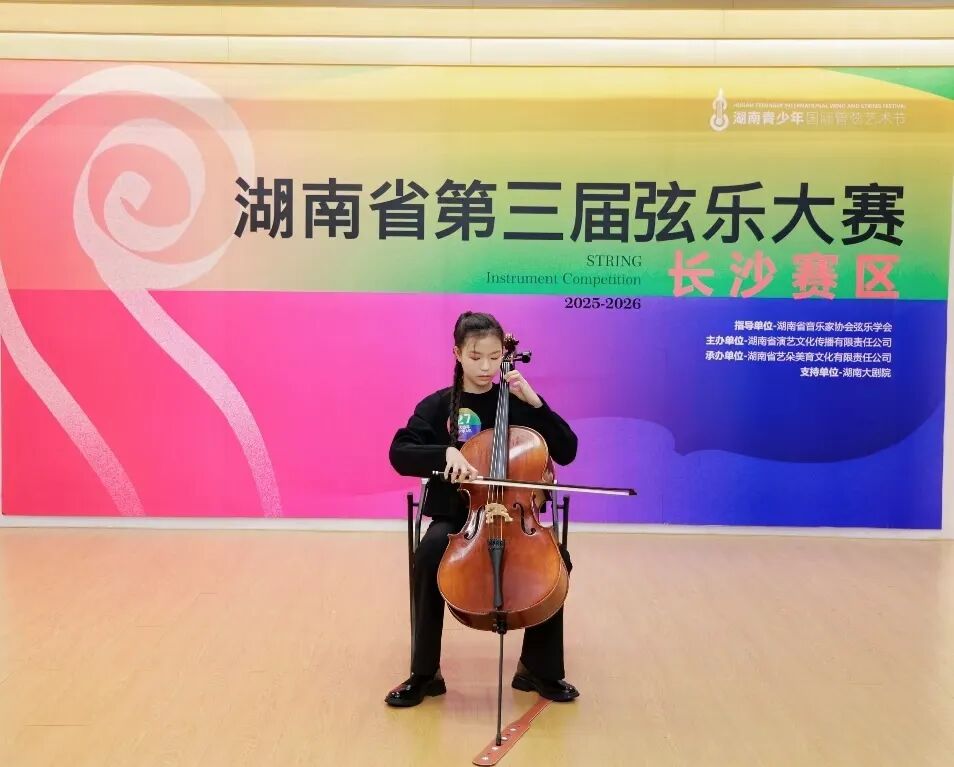
(Reposted from Mama Yin’s WeChat Moments.)
Violy: What gave you the courage to introduce her to music?
Mama Yin:
“One of my principles in raising a child is not to set limits.”
“I would not say that because her hearing is impaired, she must never have anything to do with sound, let alone music.”
“In first grade, many of her classmates were taking extracurricular classes. I thought we should sign her up for something too.”
“She started with piano. If she could learn it, she could continue; if she could not, I would not force her. Unexpectedly, she gradually did quite well.”
“She began the cello when she was a little over eight. At first, she studied piano and cello together. Later, we found she could not manage both, so she stopped piano and continued with cello.”
“In the orchestra, she first auditioned successfully for the preparatory ensemble, then Ensemble B, then Ensemble A. After that, she worked her way through auditions from a seat further back to her current position as associate principal.”
Violy: What difficulties does she still face?
Mama Yin:
“There are difficulties all the time, in every aspect of life.”
“There is no way to resolve this completely. When it comes to hearing, she does have less ability than others, and things are harder for her.”
“People with hearing loss have to put in so much more effort to do the same thing as people with normal hearing. Something someone else can memorize in a minute may take them ten minutes, or even half an hour.”
Violy: How do you explain her condition to her?
Mama Yin:
“One principle I have in raising my child is not to avoid the subject.”
“I will not conceal it or be afraid that telling her the truth will hurt her.”
“Ever since she was little, I have told her, ‘Your ears are unwell, so we need to wear your little ears. We should also thank the doctors who helped fit them. They help you hear sounds.’”
“It is like Daddy having poor eyesight and needing glasses. Glasses help Daddy see clearly; your little ears help you hear clearly.”
“This device is already part of her body. You need to face reality and accept it—and accept it with gratitude.”
Violy: Do her teachers and school know about her hearing?
Mama Yin:
“Not really. Whether at school or when signing her up for classes, I do not volunteer information about her condition to the teachers.”
“It is not that I am afraid of people knowing. I just do not want her to live and learn under special care from beginning to end.”
“Whatever she learns and whatever group she joins, she is treated the same as everyone else.”
Violy: After joining the orchestra, how did she deal with not being able to hear the conductor or the other sections clearly?
Mama Yin:
“There are certainly difficulties, but she has not told me much about them.”
“I once asked her, ‘Can you hear the students playing beside you in the orchestra clearly? Can you hear your own playing clearly?’”
“She said that first of all, she has to watch the conductor very closely.”
“Especially when she was seated further back, she could not hear what the conductor was saying at all. She could only observe, watch, and try to understand the conductor’s intentions.”
“She also believes that music is a language. Language is not just what comes out of our mouths. Music can also be felt and understood with the heart.”
Violy: Does she practice intensively every day?
Mama Yin:
“She actually does not practice for very long, and she cannot manage to practice every day.”
“At the very most, it is an hour, or a little over half an hour.”
“As for the difficulties she encounters, I think she encounters all the difficulties that every young music student faces.”
Violy: As a mother who does not know music, what is the biggest difficulty when supporting her practice?
Mama Yin:
“The biggest difficulty is that we parents know absolutely nothing about music. That is really hard.”
“When she practices, I only know that the cello is making a sound and that she is practicing. But I have no idea whether she is playing correctly or whether she should practice that way.”
“She could be reinforcing mistakes as she practices. Then, in her next lesson, the teacher has to spend even more time and effort correcting her. It would almost be better not to practice.”
“On her journey of learning music, we cannot give her any effective help.”
Violy: In situations like this, the Violy app can help you.
Violy: What do coverage by national media and various national honors mean to your child?
Mama Yin:
“I am very thankful and grateful for the honors she has received and all the reporting about her.”
“But I do not think they have changed very much for her. She still takes things in her stride.”
“I tell her that the honors she receives now do not mean very much. At most, they recognize her past achievements and efforts.”
“Everyday life and learning still have to go on as usual.”
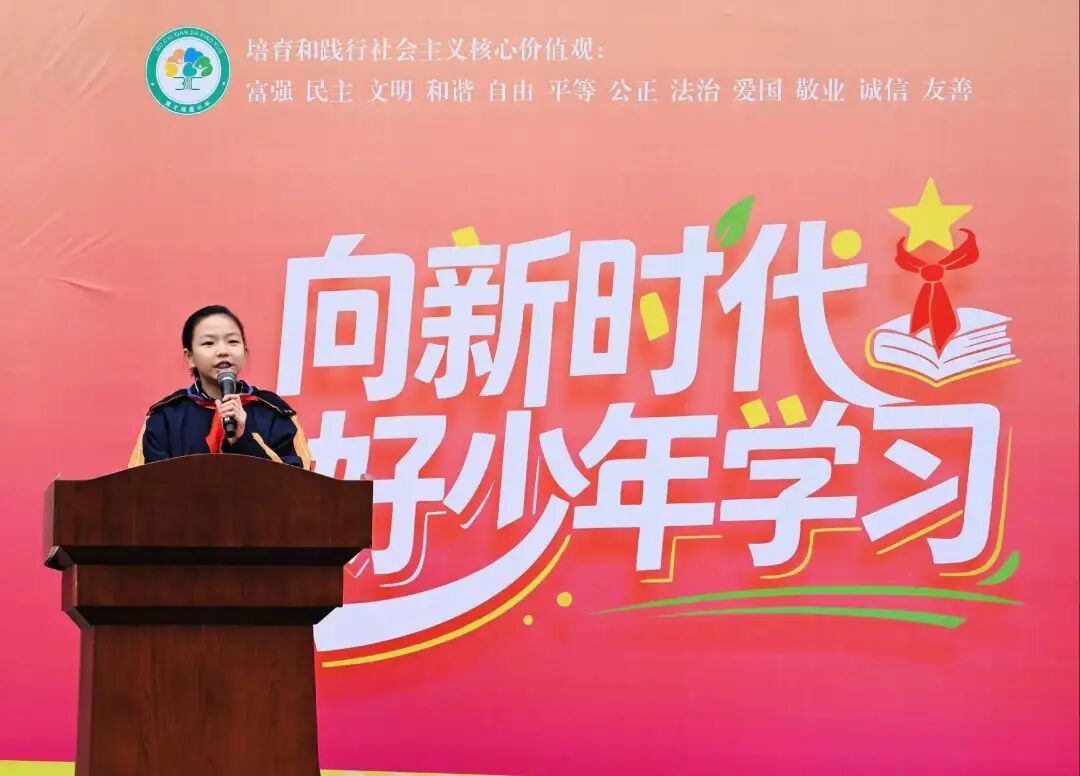
(Jingyuan was named a national “Good Young Person of the New Era,” an honor for young people in China.)
Violy: How have you supported your child over the years?
Mama Yin:
“I devote myself entirely to caring for her, in every aspect of life.”
“Because of her condition, I have stayed home full-time since she was born. I have not had a job outside the home in all these years.”
“Teaching her to speak alone can take up most of my energy. It is a long and difficult process.”
“Once we had addressed speaking, we immediately faced school, studying, and all sorts of educational needs.”
“There has to be someone dedicated to watching over her, looking after her, guiding her, and being there for her.”
Violy: How do you weigh academic results, health, and skills?
Mama Yin:
“To me, mental health matters more than any score or skill.”
“A healthy, positive outlook and a persistent, resilient character are very important.”
“I always tell my child that whether it is academics, music, sports, or anything else, what matters is having the right attitude, putting in the effort, and taking it seriously. How many marks you get or what awards you win do not matter at all.”
Violy: Does your family have any longer-term plans for her future in music?
Mama Yin:
“No, none at all. We are quite laid-back by nature.”
“Whether it is piano, cello, singing, or fencing, we do not pursue these things with a particular end goal.”
“If you have the chance to try something and want to learn it, then we as parents will support you wholeheartedly.”
“As for what the future holds, we can talk about that later.”
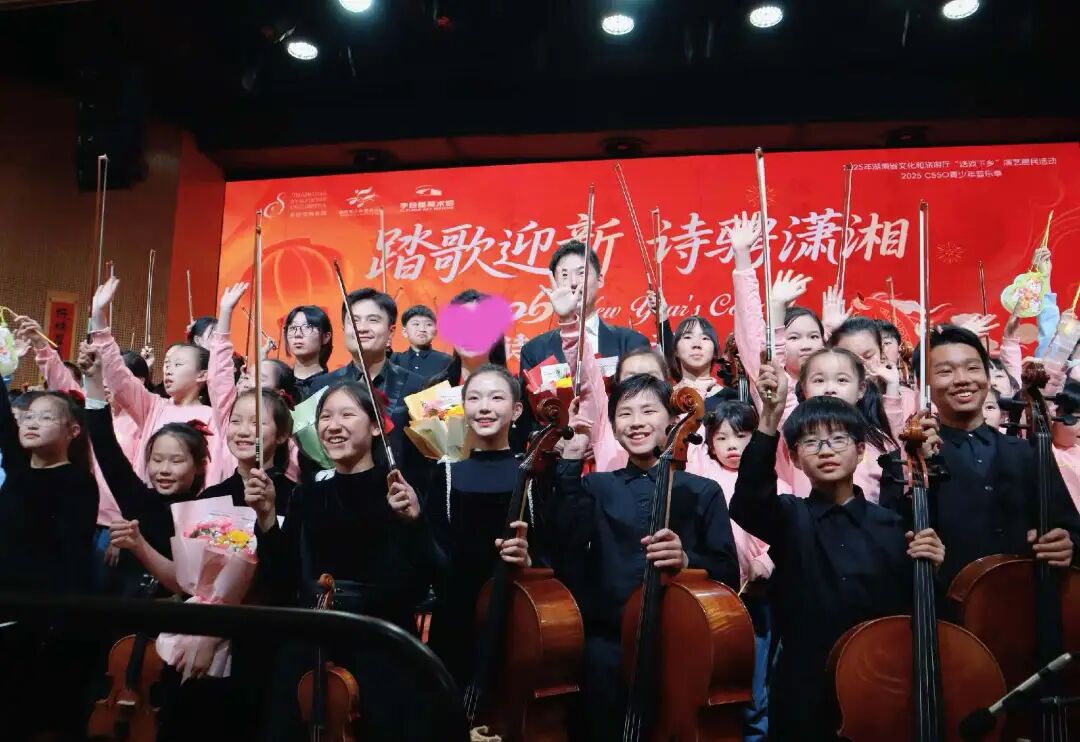
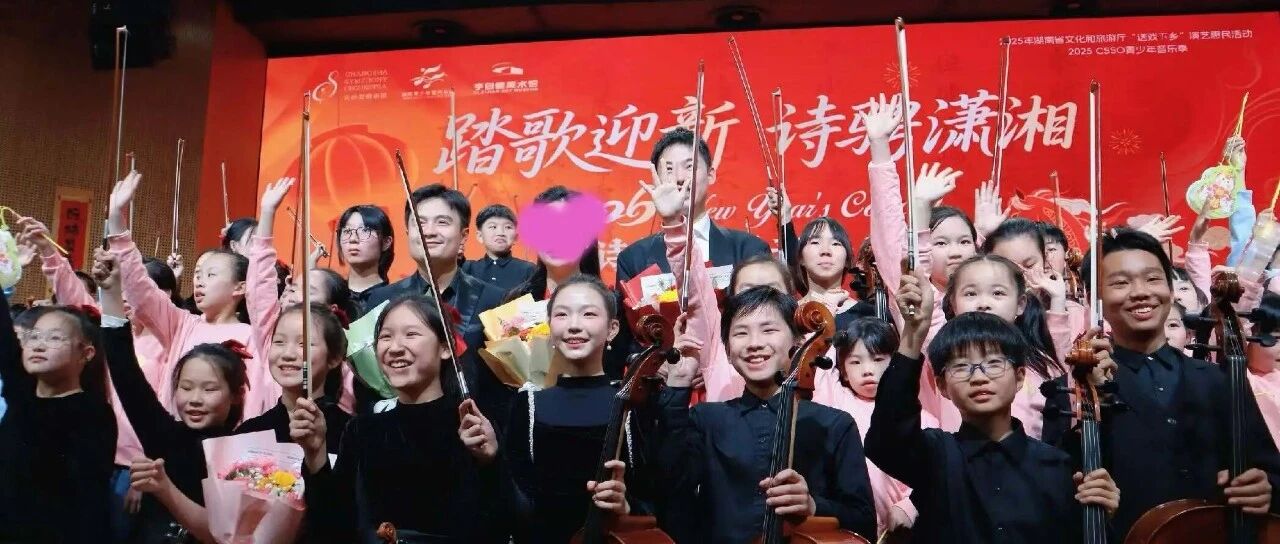
(The Hunan Youth Chamber Orchestra’s Spring Festival concert. Jingyuan is fifth from the left in the front row. Image reposted from Mama Yin’s WeChat Moments.)
3. Facing Life
What moved us most in this interview was more than a child making music on the cello.
It was a mother who, at the hardest moment life had brought her, did not hide her child away.
She said, “Do not avoid the subject,” and her child learned to face herself honestly.
She said, “Do not set limits,” and her child had the chance to experience music.
She said, “Do not treat her differently,” and her child kept stepping out into the world with other people.
Truly supporting a child does not mean shielding her from the whole world.
It means taking her hand and walking out into it together.
Perhaps every parent who supports a child’s music practice has had moments like these: finding it hard, feeling exhausted, and wondering whether they can keep going.
But Mama Yin and Liu Jingyuan’s story tells us to keep moving forward: difficulties are temporary, and we can face everything together.
Share this with parents who are supporting their children through music practice and life’s challenges.
You are also welcome to follow Liu Jingyuan’s WeChat Channels account: 刘静远小静坨 (Liu Jingyuan Xiao Jingtuo).
Advertisement in the original China-region article: Founded in 2016, the Violy app was described at the time as a world-leading instrument-practice app supporting piano, violin, viola, cello, wind instruments, and more. The original article invited readers to download it and give it a try.