Imagine holding a large jade bangle worth more than RMB 10 million.
Suddenly, someone beside you swats it out of your hand.
How would you feel?
Just yesterday, April 17, something equally heart-stopping happened at a concert by Sinfonia Lahti in Finland.
So what made the violin that went flying so remarkable?
The person at the center of the mishap was renowned Finnish violinist Elina Vähälä.
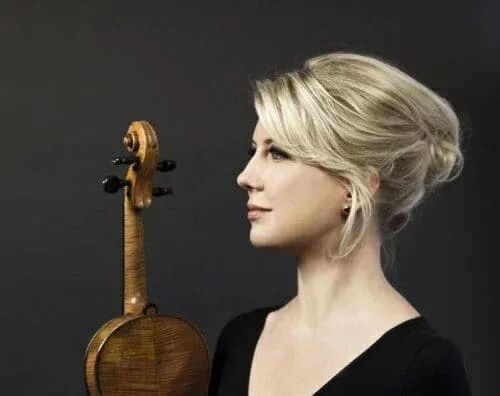
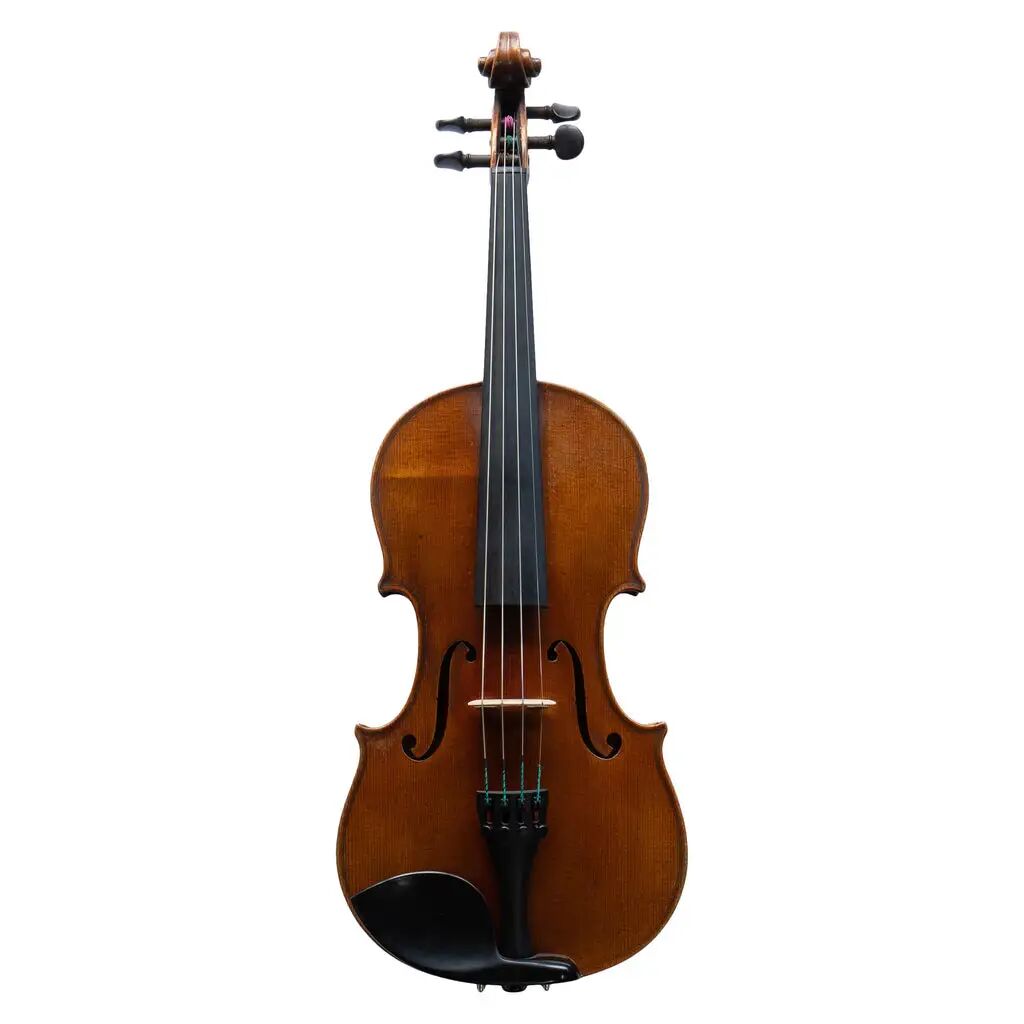
The instrument knocked from her hands was no ordinary violin.
It was a celebrated antique violin made in Italy in 1700!
Its maker was the legendary luthier Guadagnini.
In classical music, the name carries a reputation much like Ferrari’s among sports cars.
The violin is currently estimated to be worth US$1–3 million (RMB 10–20 million).
According to one account, famous violins from the 16th to 18th centuries were made from wood that grew during the Little Ice Age.
That wood has exceptionally close-set growth rings, giving the instruments their distinctive resonance.
Wood like that can no longer be found today, which helps explain the high prices.
Violins of this kind also demand extraordinary care.
For Vähälä, this violin had been with her for years.
It had long since become her instrument, part of her body and her musical soul.
A Terrifying Moment and a “Golden Left Foot”
The concert was reaching its most stirring finale.
The conductor was completely absorbed in the music, sweeping his arms with particular force.
Then—bang!
His hand struck the multimillion-dollar violin hard.
The instrument flew from Vähälä’s hands and headed straight for the hard floor. The audience gasped.
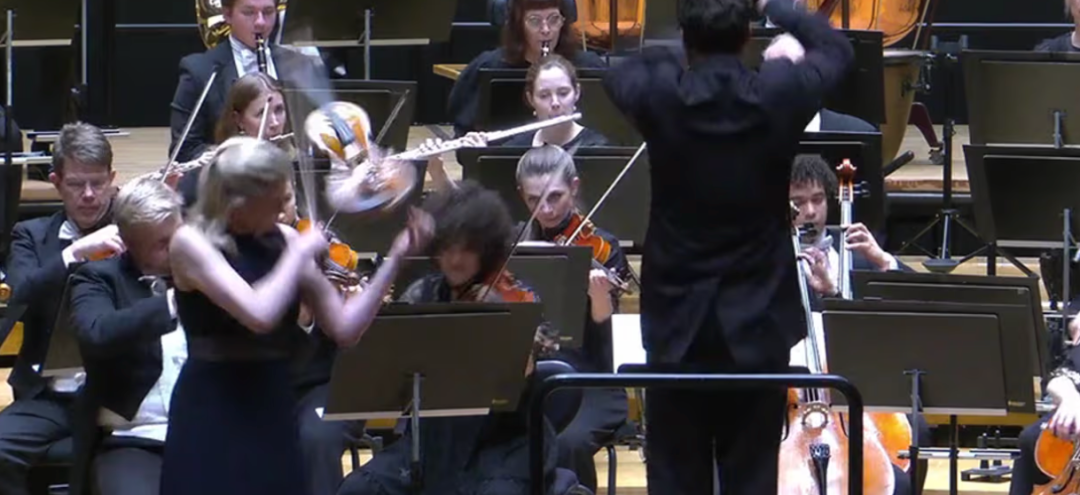
With the violin seemingly a hundredth of a second from smashing on the floor, a miracle happened!
Vähälä reacted with astonishing speed.
She shot out her foot and cushioned the violin just before it hit the floor!
(I watched closely: only 0.3 seconds passed between the violin being knocked away and her foot reaching it.)
She pulled an instrument worth tens of millions of yuan back from the brink.
Fortunately, its surface did not shatter. She used another violin afterward and finished the concert.
But she later said, heartbroken, that its sound had changed.
With an antique several centuries old, even a tiny internal seam in the wood opening slightly would be serious damage.
The violin has now been rushed to a specialist “violin doctor” for a thorough examination.
Conductors: Destroyers of Instruments?
Think this was a once-in-a-century accident?
No! A look back through classical music history reveals an amusing but painful truth:
Overenthusiastic conductors can be a violin’s “natural enemy”!
Take an incident just two years ago, in 2024.
Renowned Czech violinist Pavel Šporcl was performing with his exceptionally valuable custom-made “blue violin.”
The conductor beside him swung his baton so sharply that it sent the instrument flying!
Šporcl’s remarkable response was to extend a foot just as quickly.
He caught the violin securely on the top of his foot, saving the priceless instrument.

Not everyone is so lucky.
Back in 2016, at a concert in Portugal, violinist Rómulo Assis was playing a Tchaikovsky masterpiece with great feeling.
The conductor beside him made such a broad gesture that his hand knocked the violin to the floor.
There was a crack, and the hall fell deathly silent.
The precious antique French violin by Nicholas Lupot suffered a long crack across its surface—a serious injury on the spot.
People tend to think playing violin onstage is an elegant, safe profession.
It now seems that knowing classical music alone is not enough to be a top musician today.
You have to watch out for the conductor waving his arms beside you.
And, above all, you need to secretly train a lightning-fast “golden left foot”!
A Little Background on Famous Violins
Why are antique violins so expensive?
These centuries-old instruments, including those by Stradivari and Guadagnini, can sell for millions of euros (equivalent to more than RMB 10 million). Why?
Fact 1: They absorbed the “magic of the Ice Age”
The claim is that the sound of these famous instruments cannot be reproduced because nature gave their makers a rare opportunity.
Between 1645 and 1715, Earth went through an unusually cold period known as the “Little Ice Age” (the Maunder Minimum).
It was exceptionally cold.
Because of the cold, spruce trees high in Europe’s mountains grew extremely slowly.
Slow growth made the wood grain especially tight and even.
Violin makers happened to cut these cold-weather trees and turn them into instruments.
According to the article, even today’s most advanced machines cannot reproduce the distinctive resonance produced by that extreme cold.
Fact 2: The performer may not even own the violin
You might assume that playing an instrument this expensive makes Vähälä a billionaire.
In fact, this violin worth tens of millions of yuan probably is not hers at all!
In the classical music world, antique instruments of this stature have often been bought by large corporations, banks, museums (such as the Ashmolean Museum in the United Kingdom), or specialist foundations (such as the Nippon Music Foundation).
They are like the world’s most exclusive limited-edition supercars.
Foundations lend them to leading performers around the world free of charge, almost like an award.
So when the violin fell, Vähälä was probably more frightened than anyone.
Imagine almost crashing a RMB 10 million Ferrari lent to you by your boss!
AD
Violy is a music practice app for phones and tablets. It includes sheet music, performance videos and audio, AI-powered error correction, and practice check-ins. It supports piano, string instruments, wind instruments, and more.
In Chinese app stores, search for “一起练琴” to try it for free.