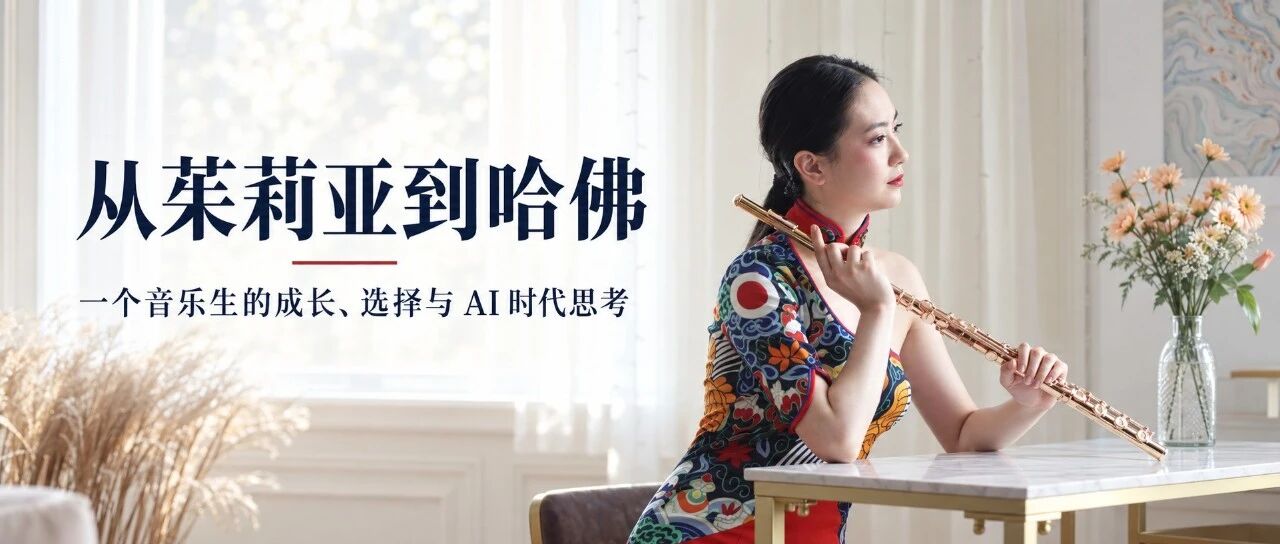
Violy · People
“Violy · People” is a Violy interview series that sets out to speak with 99 artists from China and around the world, bringing fresh artistic ideas into conversation and exploring a world of art where feeling and spirit meet.
Our guest this time is our Violy colleague Chen Yiding.
She graduated from Juilliard and then Harvard University.
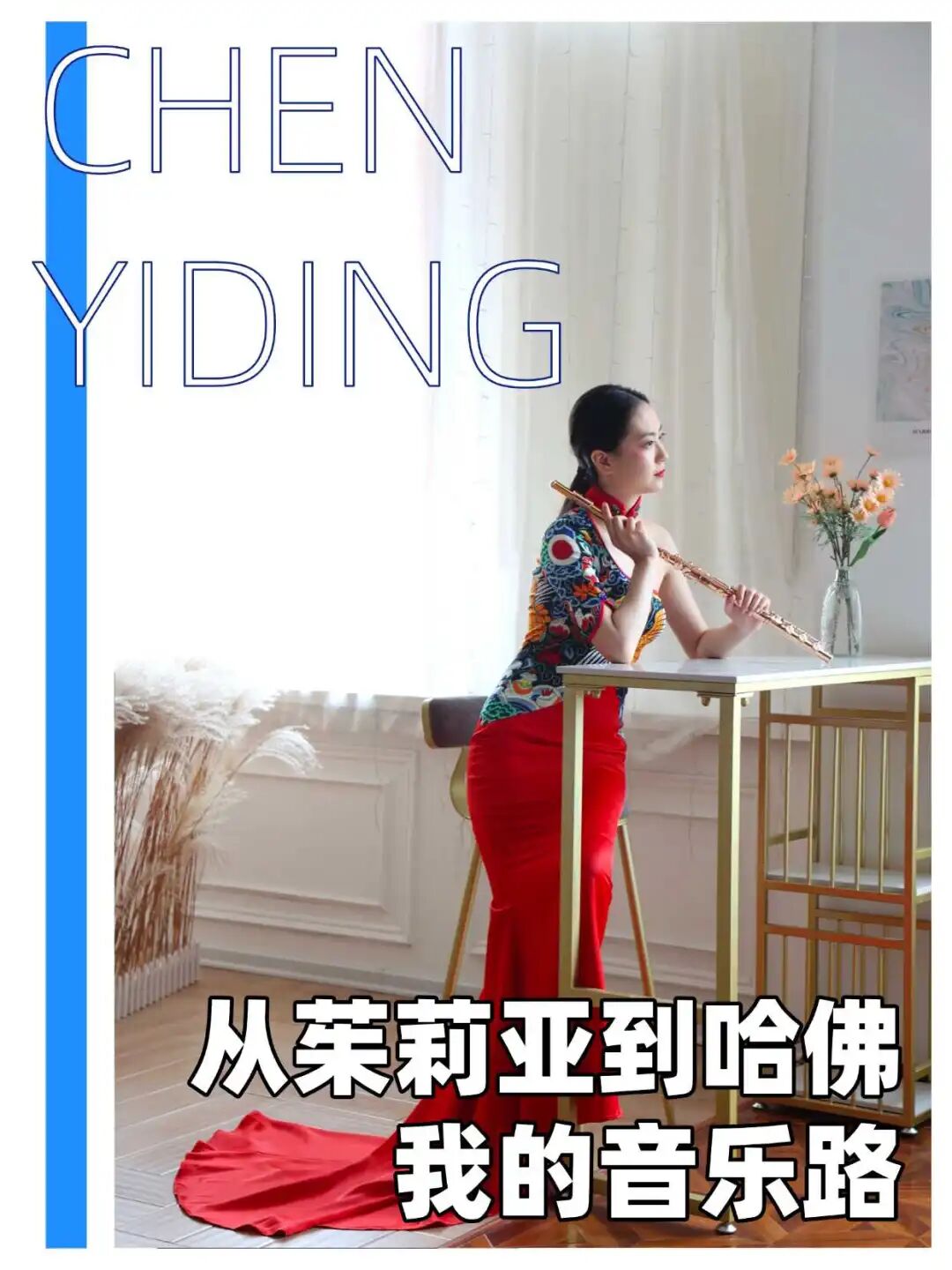
Chen Yiding
She began studying piano at four and flute at six, receiving professional training at the primary and secondary schools affiliated with Xinghai Conservatory of Music.
She then attended Juilliard Pre-College and its undergraduate program, before studying Human Development and Education at the Harvard Graduate School of Education.
Today, Chen Yiding works in academic administration at the music technology company Violy, managing online practice teachers and lesson quality.
Her journey may sound impressive, but it has also involved very specific difficulties and choices: being unable to produce a sound on the flute after three months of study, competition at a leading conservatory, uncertainty about the future at graduation, fierce competition for professional orchestra positions, and a move from the stage to work behind the scenes.
In this conversation, she discusses her upbringing and career choices, why children learn music, how to practice more effectively, what makes good music education, and whether AI will replace music.
(Coming next in the series: Liang Yingbiao, a well-known cello educator in Guangzhou.)
The interviewer is identified in the original as “园长” (Yuanzhang); their questions are labeled “Host” below.
From Juilliard to Harvard, Then to a Music Technology Company
Host: Could you walk us through your entire journey, from your first encounters with music to where you are today? Were there any particularly memorable stories at each stage?
Yiding: I first started learning piano when I was four, and my first teacher was my mother. At around six or seven, I took up a second instrument: the flute.
At the time, so many children were learning piano that the competition was intense. My mother said, “Why not learn another instrument? It cannot hurt. And a girl looks very elegant playing the flute.” That was how it happened.
Learning the flute was actually quite painful at first. A wind instrument is different from a piano: with a piano, you sit on the bench, put your hands on the keys, and get a sound as soon as you play. It took me about three months to produce my first real note on the flute. But some students I have taught could make a sound straight away in their first lesson, so it really varies from person to person.
My teacher was quite frustrated too, and eventually said, “I cannot teach this child anymore. You will have to find someone else.” Before deciding that I should learn the flute, my mother had even tried learning it herself. She thought, “This is not difficult. You can learn it.” But when it came to me, I could not make a sound. Once I finally could, though, everything progressed smoothly.
Host: When did you decide to pursue music professionally?
Yiding: Honestly, probably very early on. But at that age, I did not have a definite answer like “I want to be a musician” or “This is what I want to do in the future.” My parents helped guide me.
My family would say, “You have been learning for so many years, and you seem quite talented. Let us see where this takes you.” The feedback from my teachers was also positive. I liked music, but a six- or seven-year-old does not exactly have a grand plan for the future.
Host: You later got into the primary school affiliated with Xinghai Conservatory of Music?
Yiding: I entered in sixth grade, then spent three years at the affiliated secondary school. That meant four years at Xinghai, up to the end of junior secondary school.
Host: After finishing there, why did you decide to go straight to Juilliard Pre-College?
Yiding: I had already been thinking about further study abroad, and we had decided on the United States. After discussing it with my family, we thought that since I would be going abroad for undergraduate study anyway, it might be better to leave earlier. I could adjust sooner, which would make undergraduate study smoother. It was also a chance to start building connections, including getting to know teachers.
Host: Did you have to take an entrance examination for Juilliard Pre-College?
Yiding: Yes. The first round involved submitting an online application with basic information and application essays. Sometimes you had to write one or two short essays. Then, most importantly, you submitted performance videos.
The school reviewed the submissions. If you passed the first round, you were invited to travel to the United States for an in-person audition on campus. Everything was already in English at that point. I had attended bilingual schools from childhood, so that part was fine for me.
Host: Is moving from Juilliard Pre-College into the undergraduate program much easier than applying directly? Is it something like an internal selection process?
Yiding: Objectively, the numbers might suggest that, but it is not a rule. It is true that after entering Pre-College, you may have studied for years with a specialist teacher who also teaches undergraduates. Of course that can improve your chances of admission.
But you still have to consider the strong applicants applying in the same year. Ultimately, it depends on your abilities as a musician.
Host: You were a performer, but after your undergraduate degree you went to Harvard to study education. What happened in between?
Yiding: After graduating, I was thinking about what direction to take next. It was during the pandemic, and the broader circumstances affected the whole industry. My friends and classmates were also feeling doubtful and uncertain about the future.
We wondered what the music industry would become. With AI emerging, we also wondered whether it would affect the face-to-face, immediate experience of live music. So I was thinking about exploring more possibilities and broadening my career options.
My main principle was that the move should not be too drastic: it still had to be within a range I was comfortable with. But I also wanted to step a little outside my comfort zone in music performance while retaining a connection to my past. In today’s language, you might call it trying to become a “multi-hyphenate.”
Host: How did you choose a career after graduating from Harvard?
Yiding: I was still uncertain. Once you leave university, you discover that the job market, and reality more broadly, may not be as ideal as you imagined on campus.
After a music degree, there are perhaps only two or three obvious career paths: teaching, whether at a university or in your own studio; performing in an orchestra; or pursuing a solo career. The solo path is probably the hardest. First, you need to reach a certain standard and already have demonstrated that you are at the top of the pyramid.
I felt that if I spent the next 20 or 30 years teaching the same kinds of students, or playing the same repertoire repeatedly in an orchestra, it might not offer me much novelty or challenge. Then I realized I could explore other paths, while still staying within music.
Host: What are you responsible for at Violy now? Does your work still involve music?
Yiding: I mainly manage teachers, so I do not have much direct contact with audiences.
Host: Put simply, people book online practice teachers through the app, and you handle teacher selection and the various arrangements. Having moved from performing to academic administration, what is your relationship with music now?
Yiding: First of all, I have to say that I remain very closely connected to music. It cannot be removed from my life, because I have lived with it every day for more than 20 years. Even though I have moved into education, or might move into another field in the future, music will always have a place in my heart.

Beyond the Prestige of Elite Schools: The Real Job Market for Music Graduates
Host: You graduated from Juilliard, which is an impressive credential wherever you go. Can students like you, who attended both Pre-College and the undergraduate program, basically choose whichever orchestra they want?
Yiding: Absolutely not. It comes back to what I said earlier: your professional ability matters. When people see Juilliard and Harvard on your résumé, those names certainly open doors and make an impression.
But after that initial impression, where is your actual ability? Does it live up to those impressive credentials? That is what many orchestras and music-related employers consider.
Host: What were the students you encountered at Juilliard like? Were there many prodigies? Was it a shock when you first arrived?
Yiding: I would not call it a shock, because I already had certain expectations before auditioning: this was the “Harvard of music.” I had not expected to be fortunate enough to get in. I was really just going to give it a try.
Once I was there, I found that everyone was indeed highly capable and quite modest. Of course, sometimes there was quiet competition between us. We had competitions within the school, such as the concerto competition, where students from all disciplines competed together. Everyone prepared a complete concerto and performed it in the competition.
When I was at Juilliard, I noticed a particularly large number of Asian students, mainly from East Asia, including China, South Korea, and Japan. They perhaps made up about a third. That number might be higher now, but I am not sure.
Host: A viewer asks whether the increasing number of Chinese students at Juilliard means standards have fallen. Is that a valid question?
Yiding: I think the quality is certainly still there. But I graduated four years ago and have been away from Juilliard for four years, so I really do not know the current situation. Among my classmates, though, some are active as soloists, while others have entered international competitions and won awards. That is undeniable.
Host: Many people want to know whether they can stay abroad after studying there. From what you have seen, what distinguishes those who can stay from those who cannot?
Yiding: First, there is a very fundamental objective factor: immigration status.
While you are at school, you are of course on a student visa. If you win an orchestra position, the orchestra will provide a work visa. But as I understand it, the time allowed between graduation and actually receiving a job offer has been getting shorter. That means you have to plan very early, and even with planning, you do not know whether you will get an offer. If you do not receive one within that time, you have to return to your own country.
That really is not something the school can decide. In that respect, everyone faces the same situation. A great deal also depends on luck, with your professional ability perhaps adding to what you can offer.
Host: Before returning to China, did you audition for any orchestras in the United States?
Yiding: I did, and it was quite an eye-opening experience. It was my first in-person audition for a professional orchestra.
It was not a particularly large orchestra: the Albany Symphony in New York State. It is in the northern part of the state. Although it is not one of the so-called five or ten leading American orchestras, the competition was still very intense, because flute players from around the world could apply to audition.
Tens of thousands of applications would arrive in their inbox, and they would select a small number of applicants to invite to an in-person audition. After that, there would be a first round, a second, a third, and a fourth, all competing for that one position.
Host: On the one hand, professional orchestras have very few openings and fierce competition. On the other, the orchestra sector seems to be declining, with some orchestras even unable to pay salaries. Are those two things contradictory?
Yiding: People may have seen news stories in recent years showing that orchestras’ finances are quite worrying. A while ago, an orchestra in the Washington area announced that it had dismissed all its musicians. Many of them might have been there for 20 or 30 years and thought of those jobs as secure for life, only to lose them all in a single day.
In the United States, sponsorship is very important to an orchestra, as are charitable foundations and major benefactors. That funding matters enormously. If those supporters withdraw their money, an orchestra can certainly run into difficulties.
What Should Children Aim for When Learning Music?
Host: A viewer asks whether a four-year-old can understand what a teacher is saying. Do you think starting systematic music study at four is early or late?
Yiding: They can, but it varies from child to child. From the feedback I have received from my teachers over the years, I was quick to understand and very much a visual learner. If a teacher demonstrated something, whether abstract or concrete, I could generally reproduce it immediately after seeing it once, so comprehension was not a problem.
But the instrument matters. Children sometimes begin piano even at three. Wind instruments have restrictions because you have to consider physical development. With the flute, for example, you need to consider whether your arms are long enough, whether you have the stamina, and whether you can hold it up for that long. You also have to consider whether your baby teeth have all been replaced, because that affects breath control.
Host: When children begin learning an instrument, do you recommend learning staff notation at the same time?
Yiding: Generally, yes. For instrumental study, we usually recommend learning staff notation. Singing may also involve learning things such as movable-do solfège.
Host: You started on a professional path very early. Was that more your own choice, or your parents’ guidance?
Yiding: I liked music then, but a six- or seven-year-old does not have a grand plan for the future. So my parents helped guide me.
Parents may think that after so many years of lessons, their child seems talented and the teachers’ feedback is positive, so they should see where it leads.
Host: At this point in 2026, what does music mean for children? How has the environment for learning music changed since your childhood?
Yiding: I think the pandemic was a very important turning point. Before that, my impression was that parents of young musicians in China, and the children themselves, were caught up in very intense competition around music. It felt as though every household had a piano, and at least one child was learning piano, perhaps along with a second or third instrument.
After that turning point, people may have reduced their demand for music lessons. Instead, they paid more attention to children’s physical health and wanted them to do more sports. That seems more direct than “cultivating an appreciation of the arts.”
When you exercise, your physical condition and health improve. But if you play piano for an hour today and another hour tomorrow, can you say you will be ready to perform onstage the day after? Of course not. So it is also a question of sunk costs. Many parents consider how much time and energy they have invested, while the returns are less immediate than they imagined.
Host: Is that change happening because the world’s demand for music has declined?
Yiding: I do not think it has. Perhaps, at this particular moment, people have temporarily turned their attention to other pursuits. I think they will return to music in the future.
Host: Some parents say they approach lessons simply as a way for their children to enjoy music and play with it.
Yiding: I think that is a very healthy attitude.
Host: Starting at five, you went to concerts every week for ten consecutive years. What effect did that experience have on you?
Yiding: It was not just concerts. I went to many other kinds of performances too, including plays, stage productions, ballets, operas, and musicals. Of course, my family took me. They wanted me to encounter all kinds of music, and their attitude was really to let me listen for fun. Perhaps one day something would click.
They did not really mind whether the child sitting in the audience was taking it all in. The main purpose was exposure to the arts. As a child, I would actually be in the front row rubbing against the railing, moving back and forth along it throughout the performance.
Host: So whether you understood a concert as a child was not particularly important?
Yiding: That is right.
Is Practicing Eight Hours a Day Necessarily Better Than Practicing Three?
Host: How intensive was practice for Juilliard students?
Yiding: Mine was not especially intensive. Piano and string students tended to practice harder. Some practiced six to eight hours a day.
Host: How long do wind players generally practice each day?
Yiding: Wind players really cannot keep going that long; there are physical limits. My average was probably around three hours a day.
I think I cared more about the quality of practice than the quantity. If you practice eight or nine hours one day and find the next day that everything has reverted to how it was before, then you have not really understood what is in the music. That is ineffective practice.
Host: In other words, you cannot just count practice hours. You also have to make sure each session actually brings improvement.
Yiding: Exactly.
Good Music Teachers Do More Than Point Out Wrong Notes
Host: What differences did you see between music education at Juilliard and music education in China?
Yiding: I have made some observations recently. In my regular work reviewing teachers’ piano lessons through the administration system, I find that many teachers in China may not really know how to spark children’s interest in music or their desire to explore it.
They may simply keep saying, “Right, that note was wrong. What should that note be? Try again. Right, again.” To me, that kind of constant repetition does not accomplish much.
Often, teachers tell students directly, “This is what you did wrong here, and this is how you should fix it,” instead of asking the child, “How do you think the passage you just played could sound better?” I think there is still something missing in how we encourage children’s own understanding of music.
When I studied abroad, teachers often asked open-ended questions. Open-ended questions can also be abstract, such as, “What kind of story do you imagine here?” Or, “What kind of sound do you imagine as you play? Could you share that story with me?” It was a more exploratory style of teaching.
Host: It encouraged students to think and ask questions, rather than having the teacher simply tell them what was wrong.
Yiding: Yes. But I would add that you cannot simply label an education system, or an individual teacher’s teaching style, good or bad. What matters most is the fit between the student and the teacher.
If a student likes a very strict, demanding style of teaching, then that teacher is a good match for them.
Host: Yes. I would also add that we often criticize Chinese education as “spoon-feeding,” but the education we have today reflects China’s national circumstances. China is also in the world’s leading group in scientific research. Each approach has advantages and disadvantages, so we cannot simply pass a sweeping judgment on the quality of education in any particular country.
Why People Still Need Music in the Age of AI
Host: Do you think AI will replace music and art in the future?
Yiding: The simplest answer is no.
I think AI brings music many possibilities we could not previously have imagined. It is an interdisciplinary field: you can combine music with algorithms, with technology, or with anything else you want. We cannot predict what the future will look like, but the sky is not going to fall.
I think music will always be something AI cannot replace, because it is a field that places great value on connections between people.
Host: Yes. Behind music is not just a hand, but a person. Emotion is central to being human, and music is a vehicle for emotion. As AI becomes more deeply embedded in our lives, art, sport, and reading may actually become more important.
Yiding: Yes.
Host: We do not need to imagine AI as a threat. At this stage, it is a more convenient tool that can help us become more creative. However powerful the tool, people’s perception and understanding of music remain at the center.
Yiding: AI will add more layers and possibilities to music.
Host: Whenever you perform onstage, how does the connection between music and real people happen?
Yiding: Every time I finish a piece onstage and hear the applause from the audience, I feel a sense of achievement in that moment. I feel that my music has reached real people’s hearts, perhaps giving someone something to think about or moving them in some way. I feel that after every performance.
Host: Do you still long for the stage?
Yiding: I would not quite say that, but if I had an opportunity to perform again, I would still enjoy it very much.
Host: How does the sense of achievement in your academic administration work differ from that of performing onstage?
Yiding: When you perform onstage, the applause gives you very immediate feedback. But behind that moment, you may have spent “ten years honing your craft,” or practiced hard for six or seven hours every day, just to experience less than a minute, perhaps only 20 or 30 seconds, of that sense of achievement.
My academic administration work is similar. Every day, I review many lessons and think about how to improve lesson quality on the platform and the teaching experience for users and students. That is a long-term undertaking.
In the short term, it may not give me a particularly strong sense of achievement. But if one day a parent or teacher tells me, “I think your product is very good,” that is recognition of my work, and a sense of achievement too.
From professional performance to education and then music technology, Chen Yiding has not left music behind.
She has simply extended her connection with music from performing onstage to education, products, and more people’s everyday practice.
Perhaps that is the most inspiring part of her experience: there does not have to be just one path through life. You can leave your original position without abandoning everything you have built along the way.
And as AI brings more technology and tools into the world of music, what remains irreplaceable is people’s perception of music, and those real moments when people connect and are moved by it.
(Coming next in the series: Liang Yingbiao, a well-known cello educator in Guangzhou.)
AD
The following advertisement appeared in the original China-market article; it is retained here as part of that article, rather than as a statement of current Global availability or trial terms.
The original advertisement described the Violy app as music practice software for phones and tablets, with features including sheet music, performance audio and video, AI error correction, and practice check-ins. It stated that the app supported piano, string instruments, wind instruments, and other instruments.
It invited readers to search for “一起练琴” (Violy’s Chinese name) in their app marketplace to try it free.