Why Attend Concerts?
Writing in 2018, the author anticipated that, with the arrival of the age of machine intelligence, computers and robots would replace humans in an increasing range of fields. In the world our children would grow up in, the humanities, the arts, and creativity would become increasingly important. The author saw more and more parents placing greater emphasis on arts education, with a clear trend toward developing musical abilities by learning an instrument, hoping to give children a competitive advantage in the future and a richer experience of life.
For children learning an instrument, attending concerts can help them become familiar with their instrument earlier and understand the pieces they are practicing. It can also help them set goals and feel more motivated to learn.
Still, many parents think of concerts as something sophisticated and intimidating, and do not know where to start. Today, let us talk about how to take children to concerts.
Choosing a Concert
Once you have decided to give your child a taste of a live concert, it helps to know about the pitfalls you might encounter.
Not every concert is suitable for children. Taking into account a child’s age, ability to understand music, exposure to and knowledge of music, and the complexity of the concert, we can think of their readiness for listening in three stages: beginner, intermediate, and advanced. Parents can use the following suggestions as a guide.
First Experiences and the Beginner Stage
Start mainly with accessible, popular programs, such as music from films and animation or short classical pieces. Examples include:
- Music from Hayao Miyazaki’s animated films
- Secret Garden
- The Piano Guys
- Saint-Saëns’s The Carnival of the Animals
You can also attend performances by classmates or student orchestras.
The Intermediate Stage
Children can begin exploring more demanding repertoire and try listening to larger-scale works, such as:
- Beethoven’s Symphony No. 5, often nicknamed “Fate” in China
- Beethoven’s Symphony No. 9, with its “Ode to Joy” finale
- Music by Johann Strauss
- Waltzes, such as Voices of Spring and The Blue Danube
- Polkas
- Tchaikovsky’s Swan Lake Suite
- Vivaldi’s The Four Seasons
- Mozart’s Symphony No. 40
- The four great violin concertos: Beethoven in D major, Brahms in D major, Tchaikovsky in D major, and Mendelssohn in E minor
- Chamber music for small ensembles: with fewer players, it is easier to hear clearly and understand what each part is doing
Translator’s note: The original lists Tchaikovsky’s violin concerto as being in D minor. The Los Angeles Philharmonic’s work entry identifies it as the Violin Concerto in D major, Op. 35; the key has been corrected above.
Other well-known pieces that are relatively accessible are also good choices.
The Advanced Stage
- Attend more formal concerts, including performances by orchestras counted among the world’s ten most famous
- Solo recitals by renowned performers
- Paganini’s 24 Caprices
- Music by Rossini
- The overture to William Tell
- The overture to The Barber of Seville
- Ravel’s Tzigane
Finding Concert Information
One point deserves attention: the original article says that, at very formal concerts, children under 1.2 meters tall are not admitted, describing this as an international convention. If your child is too young, you may need to wait a little longer.
Translator’s note: A 1.2-meter height cutoff should not be treated as a universal international rule. Admission requirements depend on the venue and event. For example, the Los Angeles Philharmonic’s published venue policies, checked for this translation, set a minimum age of six for several concert series at Walt Disney Concert Hall, while specifying different ages for family programs. Check the requirements for the particular concert before buying tickets.
In its 2018 Chinese context, the original article reported that China did not have a dedicated website bringing together concert information: parents generally had to use broader ticketing websites or individual theaters’ performance listings. It suggested the following channels.
General ticketing websites:
- Damai
- Yongle Ticketing
- China Performance Ticketing Network
- Piaowang
Local orchestras’ or theaters’ WeChat official accounts, with examples including:
- Shenzhen Symphony Orchestra
- Shanghai Art Center, as named in the original
- Douban local events
The original grouped Douban’s local-event listings with these other sources of concert information. It suggested that the channels above could cover the vast majority of concerts. Choose a concert suited to your child, buy parent-and-child tickets, and go experience it together. These are recommendations from the original 2018 article for readers in China, rather than a verified list of current international ticketing services.
Preparing Before the Concert
All right: you have chosen a concert that interests your child and successfully bought tickets.
Next, it is a good idea to explore the concert’s theme in advance. Parents and children can learn about the background to the works, their composers, and the musical styles of the periods in which they were written. This preparation can help children understand what they hear, find it easier to sit through the concert, and deepen their appreciation of the music.
You should also go over the rules for attending a concert:
- Dress appropriately; avoid tank tops and slippers. Show respect for the performers and for yourself.
- If you have a cough or an itchy throat, consider bringing some throat lozenges.
- Arrive 10 minutes early. Being late is not a good habit.
- With the preparations more or less complete, you can start counting down the days until the concert.
Off to the Concert!
Everything is ready. Take your child to the concert venue.
You have chosen a concert with a suitable theme, bought tickets, learned about its background, and become familiar with some basic concert etiquette.
Let’s go!
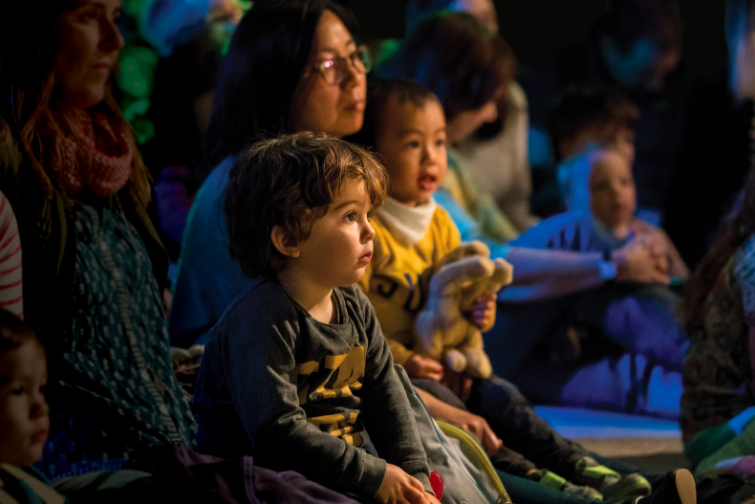
There are also a few things to keep in mind during the concert:
- Keep quiet. Do not talk loudly or whisper during the performance.
- Do not move around unnecessarily.
- Keep your phone on silent.
- Do not use flash photography.
- Do not applaud between movements. You can applaud when the conductor has fully lowered both hands and turned to acknowledge the audience.
- Applaud after all the works have been performed. Enthusiastic applause may lead to an encore.
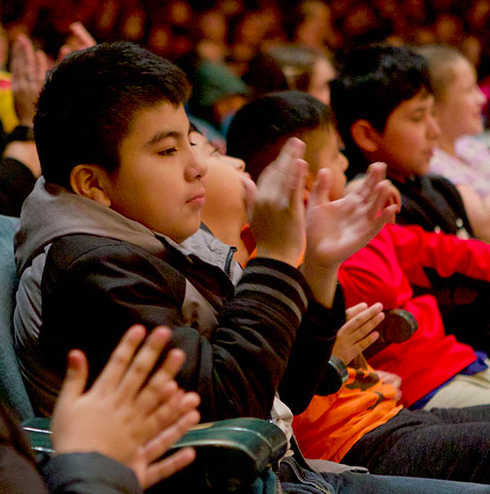
Of course, if your child becomes bored and struggles to keep listening, try offering reassurance: hold their hand, kiss their forehead, or make eye contact. Encourage them to keep going as a basic sign of respect for the performers.
After successfully attending a concert together, you can talk with your child about how each of you felt about the experience.
When it comes to taking children to concerts, parents’ attitudes are crucial. If you do not understand the music, learn alongside your child. Doing so can bring you closer and help both of you grow.
Taking children to concerts can develop a family’s musical appreciation and strengthen the bond between parents and children. If you have the opportunity, give it a try: it can be a special experience.