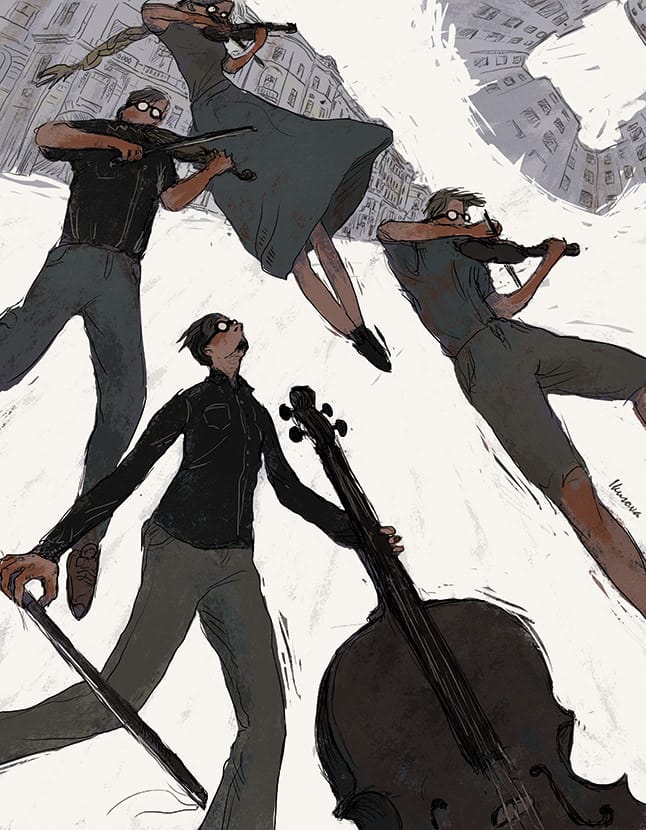
Today, let us hear eight string instrument enthusiasts tell their stories about music.
This is a long article, so consider bookmarking it to read at your leisure!
Historical context: This Chinese adaptation was published on August 6, 2019. The interviews originally appeared in the February 2019 issue of Strings magazine. Ages, affiliations, and relative expressions such as “this summer” and “last year” reflect the interviews at that time, rather than the present day. The first-person accounts below are the interviewees’ recollections.
For an adult, returning to the role of a student can be challenging, whatever the subject. Whether it is finding room in a busy schedule to practice or being outplayed at a performance by an 11-year-old prodigy, these are experiences an adult amateur musician has to face. And, as we all know, reaching a level of playing like Yo-Yo Ma’s takes years, even decades. I interviewed eight adult string instrument enthusiasts from different schools or camps. Let us explore the challenges and perseverance along their musical journeys. — Stephanie Powell, interviewer and editor at Strings magazine
01
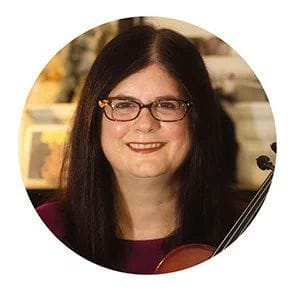
Samira Saliba Phillips, 56, participant in the Baltimore Symphony Orchestra’s Rusty Musicians Program
Why I Play
I play simply for the physical and emotional pleasure of making music. Above all, there is joy in belonging to a group that can turn the little marks on a page into actual music. Some of us are outstanding players, and that is a gift to everyone in the group.
My Goals
One goal is to keep improving my technique and musicianship. The more I improve, the more I want to improve. Another is to find opportunities to perform challenging pieces at a high level. In that respect, I am very fortunate to belong to an excellent community orchestra, the Hopkins Symphony Orchestra, and to have taken part several times in programs the Baltimore Symphony Orchestra offers for adult amateurs. My final goal is to sight-read as much chamber music as possible, mostly for fun.
My Challenges
My biggest challenge is maintaining my playing and learning new pieces without regular lessons or a teacher. After 25 years of formal study with different teachers, I now have a good understanding of what to listen for and how to practice, but working without feedback still feels very different.
Memorable Moments
Performing Tchaikovsky’s Symphony No. 6, the Pathétique, with the Hopkins Symphony Orchestra is a particularly unforgettable memory. The work has many emotional layers and great intensity, and it requires a strong connection between the conductor and the orchestra. Everything went smoothly in that performance. When we finished the final movement, I had tears in my eyes, and the entire concert hall was utterly still.
02
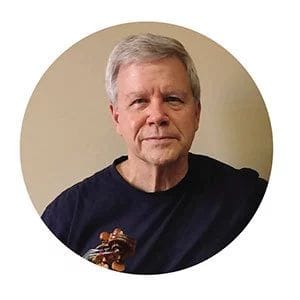
David Preston, 62, participant in the Interlochen Adult Chamber Music Camp in Michigan
I began learning the violin at eight and played in school and youth orchestras throughout high school and college. For the next 30-plus years, I more or less gave it up because of work, moving around, and family commitments. But when our daughter and son began learning the violin and cello respectively, I started thinking about taking up my violin again. Both children practiced seriously through their high school years, and my wife and I accompanied them to countless lessons and performances.
Inspired by the children and their excellent teachers, I decided to make violin playing a major part of my retirement. I started playing again about seven years ago and have practiced more intensively since retiring five years ago. I am fortunate to have a wonderful violin teacher, Daniel Sender, an associate professor in the University of Virginia’s McIntire Department of Music. I now belong to two community orchestras and an informal chamber group. In the summer, unquestionably my favorite musical season of the year, I attend the Interlochen Adult Chamber Music Camp in Michigan. This summer will be my fifth time there.
Why I Play
The sheer joy of the violin and music, and the satisfaction of working to improve.
Practicing, rehearsing, and performing throughout the year: community orchestras in the fall, winter, and spring, and Interlochen in the summer.
Encountering music of different kinds and levels: I joined the first community orchestra for enjoyment and the second to challenge myself. At Interlochen, I enjoy chamber music, both pieces we prepare and pieces we sight-read.
The pleasure of making friends in all these groups.
My Goals
My daughter reached a very high level of playing in high school, when she was enrolled in the preparatory program at Rice University’s Shepherd School of Music. I know I will not reach that level, but my goal in retirement is to improve as much as I can. In other words, at this stage I sincerely want a substantial improvement in my playing, rather than simply the immediate pleasure of making music. I hope I have enough time to achieve this ambitious vision, and I am willing to start over to correct bad habits and develop new skills.
Simply put, my main goal is to take my technique and musicianship to a new level. As a source of motivation, though, that is rather abstract. More concretely, I have a list of pieces in mind that I hope to be able to play, including Bach’s unaccompanied Chaconne, which the Chinese adaptation describes as a standard piece that is not too daunting. The point of these pieces, for me, is not to perform them in public—heaven forbid!—but to improve my technique and reassure myself that I can essentially play them at a respectable level, gaining a sense of achievement and satisfaction. Another goal is to learn, and learn well, some of the chamber works I often hear at Interlochen.
Translator’s note: The Chinese adaptation attaches “not too daunting” to the Bach Chaconne. In the original interview, Preston lists a standard violin concerto that is not too daunting and the Bach Chaconne as separate goals; the qualification applies to the concerto.
My Challenges
Technical: Changing my bow hold. Doing that while continuing to play requires a long, difficult transition, and can leave me unable either to play a piece properly or to hold the bow correctly. Yet I do not want to stop playing during the correction process. Much of the difficulty comes from the loss of flexibility with age, something I have to face and accept.
Musical: Improving tone quality and intonation, and using the new bow hold to strengthen my musical expression.
Personal: Deciding what counts as “good enough” with a particular technical difficulty. At what point do the returns start to diminish, so that I should stop? Or should I keep practicing? At my age, reaching a given level also takes much more practice than it did when I was a child. Correcting bad habits is much harder than learning correctly from the start, too.
Memorable Moments
Last summer at Interlochen, I had one particularly memorable experience. To my great delight, my 29-year-old son, a cellist, decided to come to the camp with me for the first time. During the week, he and I separately played with another violinist and a violist, and we all felt that we should get together for something challenging before leaving. We chose Schubert’s quartet Death and the Maiden. Fortunately, our first violinist—not me!—was fully up to the challenge, so we sight-read the entire work, and it was wonderful. Alongside the beautiful music, we had some funny moments when our instruments made strange sounds. Successfully reading through a piece with partners who actively listen and respond to one another is itself a joyful experience.
This was one of the strongest chamber groups I have played with, and it stands out when I look back on my return to the violin. I was also delighted to play with my son. His excellent cello playing was a pleasure to hear and made me proud. His earlier lessons and long hours of practice had brought him to that level.
03
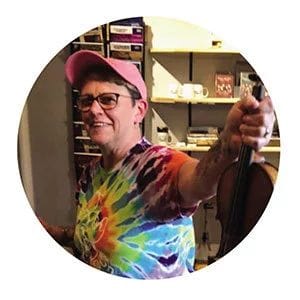
Anne Duffus, 63, participant in the FiddleStar camp
Translator’s note: The Chinese adaptation spells the name “Anne Duffufs”; the original interview identifies her as Anne Duffus.
Why I Play
The endless musical journey and my musician friends keep me playing. Music is already part of me. I cannot think of another way to explain it. Music is a metaphor for life itself. There is always more to learn, explore, improve, and contribute. We never reach a final destination; we simply keep moving forward. Playing the fiddle touches the very core of my life.
My Goals
I have short-term and long-term goals. My short-term goal is to feel content with my playing while working to improve. That is very difficult for a perfectionist like me, who always wants to play as well as the musicians I listen to.
My long-term goal is to play Irish music with a good tone and rhythm.
My Challenges
Time is my biggest challenge. I am a veterinarian and can only fit practice in outside work, but I am often tired by the time I get home.
Relaxing my body while practicing is another major challenge. I am still working on keeping my left hand more relaxed as I play.
Memorable Moments
Once I performed one of my own compositions with Liz Knowles, an American composer and Irish-style fiddler, as the Chinese editor notes. It was undoubtedly the best concert of my life.
Another time, I played “Shove the Pig’s Foot in the Fire” with friends at fiddle camp. It felt wonderfully Zen! The Chinese editor’s note attributes the tune to American musician Bruce Molsky and identifies it as country music on his 1997 album Bruce Molsky & Big Hoedown.
Translator’s note: The recording catalog confirms a 1997 recording on Bruce Molsky & Big Hoedown under the longer title “Shove the Pig’s Foot a Little Bit Further Into the Fire.” This confirms the recording, not the Chinese editor’s attribution of composition to Molsky.
04
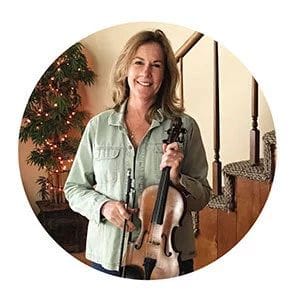
Lisa Broody, 61, participant in Sparrow Music Camp
I have played the fiddle for ten years, although I started rather late. I had always been interested in playing Irish and Scottish music. That led me to old-time music, and then to Aisha Ivey, director of Sparrow Music Camp, and her Old Time Ensemble Group at Florida State University.
As a late starter, I have found camps and ensembles particularly important for building confidence. At Sparrow Music Camp, you learn how to play with other musicians, form bands, and perform. One wonderful thing is the range of ages and ability levels among the participants. My granddaughter attended one weekend, learned to play the ukulele, and performed. It was a fantastic experience!
Music has brought inspiration to every part of my life, and I am proud to belong to this community. Playing with other musicians lets you keep learning and improving while giving you a sense of belonging.
05
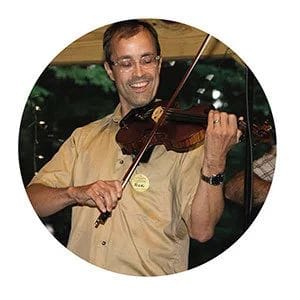
Nicholas Martin, 47, participant in Mike Block String Camp
I grew up playing classical violin and orchestral music, and studied music as an undergraduate at Yale University. I spent a year in Ireland studying classical violin, but also began playing traditional Irish music there. From then on, I became interested in different styles, including old-time, bluegrass fiddle, Celtic fiddle, country and western, Gypsy music, jazz, and gospel. I attend many music camps each year.
Why I Play
I love everything about the violin: every style I can encounter, its feel, its sound, the sensory experience, and the beauty of the instrument itself. I can spend hours playing harmonies in thirds, sixths, and fourths over and over, with a drone or an old-time fiddle sound. I love styles from every era. So playing is not a question of motivation, but of time—I need more of it.
My Goals
I spend a great deal of time learning country, bluegrass, and jazz fiddle. I hope gradually to build a larger repertoire of longer pieces and to practice improvisation. My biggest goal is to spend more time playing with others in ensembles or bands. At some recent camps, I learned how to make arrangements more interesting, and I really enjoyed that. I also enjoy learning to play rhythmic or contrapuntal parts that support the main melody, enriching the music while bringing the audience’s attention back to the singer.
My Challenges
My challenge is time. After a full day of work, I am always tired, and I may not be able to start practicing until after nine, once the children are asleep. My perfectionism also surfaces when I compare myself with other musicians. I know the ambition to develop stronger technique and more well-rounded abilities is positive: that energy keeps me moving. But its side effect is that I often isolate myself until I feel “ready” to go out and play with others.
Two things have helped me improve this situation recently. With regard to perfectionism, I have begun learning a new instrument, the banjo, with no expectations of myself. Everything is new, so I am pleased with whatever I can play. I am now trying to bring that openness to the violin, which has carried so many of my expectations over the past 40 years.
As for isolation, I have played church music with some very enthusiastic musicians. In that setting, perfectionism and self-criticism in performance have to be seen in relation to a higher connection, rather than simply to me.
Memorable Moments
A recent highlight came from working with an African American musician who is an accomplished singer, keyboard player, and guitarist. Her background, experience, energy, and style are completely different from mine, and that collaboration has taught me a great deal. Improvisation has always seemed distant and mysterious to me, but it comes much more naturally and fluently to her, bringing to mind styles that had previously felt inaccessible to me. Over the past few years, one of my greatest pleasures has been the fresh energy and material I gain from attending one or two camps each year, especially Mike Block String Camp and the Swannanoa Gathering. Playing and talking with my fiddle “heroes” is particularly enjoyable.
06
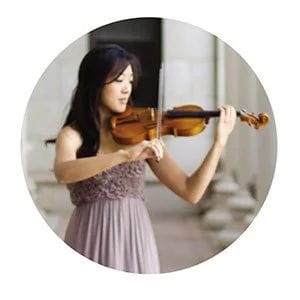
Terry Chang, 30, participant in the Baltimore Symphony Orchestra’s Rusty Musicians Program
Why I Play
Making music with other musicians in an ensemble is the main reason I keep playing. I love playing in symphony orchestras and chamber groups. It is always rewarding to witness individual parts coming together to form a great work.
My Goals
My goal as a string player is always to work toward becoming a better violinist, both technically and musically.
My Challenges
One of my biggest challenges is finding time to practice, especially as a busy adult.
Memorable Moments
One highlight was performing Richard Strauss’s Death and Transfiguration with the Baltimore Symphony Orchestra. I am very grateful to have played such a great work with such an outstanding orchestra at Meyerhoff Symphony Hall, and I will never forget the experience.
07
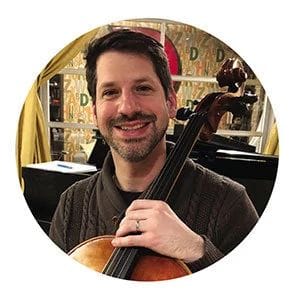
Michael Freilich, 39, participant in the Bennington Chamber Music Conference
Why I Play
As an amateur, playing the cello is my ultimate escape from everyday worries. When I practice alone, sight-read with friends, or perform, I pay almost no attention to anything else. I therefore treasure time set aside specifically for the cello. Over the past few years, I have found that opportunity at the Bennington Chamber Music Conference, where I can spend an entire week focused on the instrument. It is a wonderful week away from work each year!
My Goals
I have one short-term and one long-term goal. My short-term goal is to find a balance between my cello life and the rest of my life. That always seems like an impossible task. Balance does not come all at once, but every year I spend a few months concentrating on cello practice. My long-term goal is to perform a concerto with an orchestra someday. I never won a concerto competition as a child; perhaps I can win one as an adult!
My Challenges
My biggest challenge is finding enough practice time to maintain a level that satisfies me. I know that a piece only becomes as enjoyable as it should be when I have spent enough time practicing it. I now have a demanding full-time job with frequent travel, which often prevents me from practicing consistently. Although I can quickly regain my feel for playing each time, the best way to overcome this challenge is to set goals and deadlines. Whether I am sight-reading with friends or performing, having a clear goal matters most to me.
Another major challenge is intonation!
Memorable Moments
Two come to mind. The first was playing Brahms’s Piano Trio in B major with my wife on piano and my best friend on violin. Both are professional musicians. As an amateur, my greatest pleasure in that process was improving both technically and musically. It also reminded me that the cello occupies a smaller part of my world, making the experience even more meaningful. The second highlight was playing Swan Lake with 150 other cellists at Hans Jensen’s Cello Happening in 2016. One hundred and fifty cellos!
Translator’s note: The Chinese adaptation names Swan Lake here, but the original interview names The Swan. The year and the number of other cellists are the same in both accounts.
08
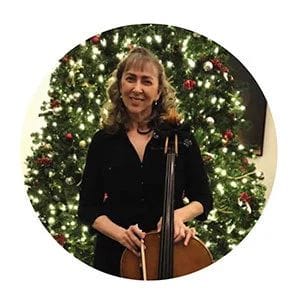
Nancy Mack, 65, participant in the SCOR! camp
Translator’s note: The Chinese adaptation spells the name “Nancy Mark”; the original interview identifies her as Nancy Mack.
My son began learning the violin at five, so from then on my life was filled with lessons, musical activities, and performances. When he left home for college, I realized how much I would miss all of that, so I decided to start learning the cello at 50. I tried the violin too, but found it too difficult!
Why I Play
I keep playing because I have fallen in love with the world of music! Before attending SCOR!, a camp specifically for adults, I had taken lessons for five years and had always practiced at home on my own. The camp was an eye-opening experience for me—absolutely wonderful! The teachers were excellent at encouraging and inspiring students. Thanks to the camp, I experienced the joy of playing with friends, which is one reason I have continued ever since.
My Goals
My first goal was to play as well as Yo-Yo Ma, and I thought I could achieve that in six months. I thought all I needed to do was learn the right notes and put the bow on the strings. Then reality dawned: it was nowhere near that simple. My goals now are to continue learning with my teacher, keep improving my tone, and, above all, enjoy sharing music with others!
My Challenges
My biggest challenge is accepting that I may never play as well as I would like. My career was mainly in accounting, where there was always a way or a solution to a problem. Music is different. It requires a great deal of experimentation and listening before I can decide whether the sound I am making is the sound I want.