The October 2026 Shenzhen announcement included a ticket giveaway in China: the two participants whose comments received the most likes would each receive one concert ticket.
In twentieth-century piano music,
the “Russian school of piano playing” earned an illustrious reputation.
Among the great artists competing for distinction in that era,
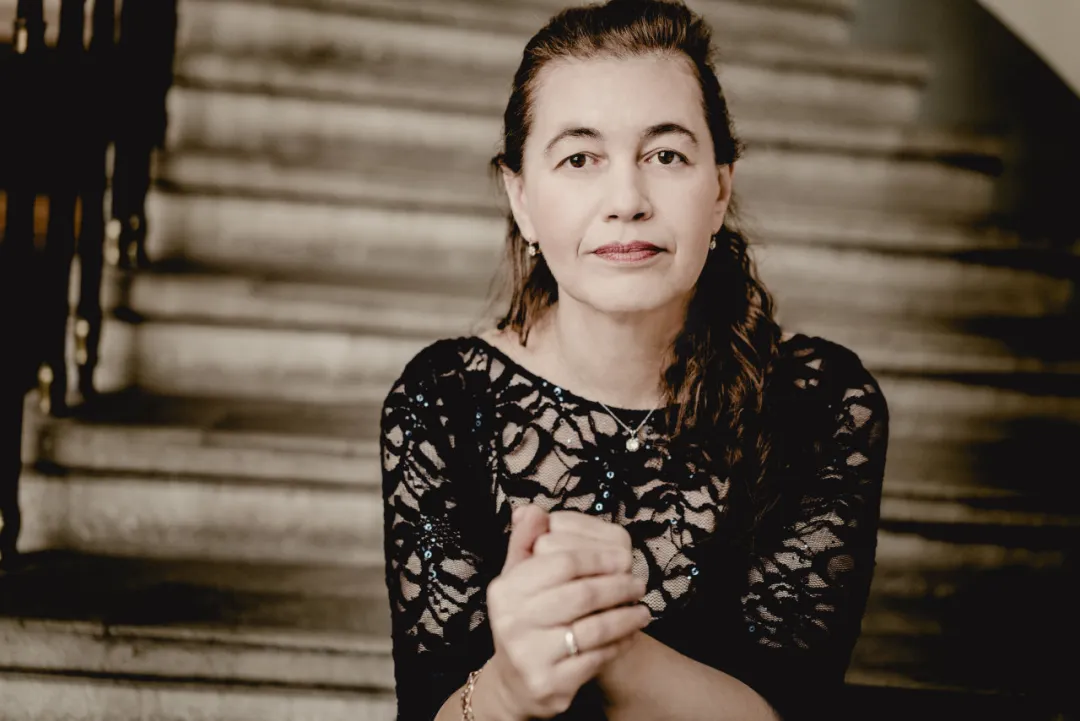
Lilya Zilberstein
emerged as one of its most representative female pianists.
Her exquisite, astonishing performances
captivated audiences, who described them as “divine”
and hailed her as the “Russian Piano Empress.”
October 25, 2026
was the announced date for this master pianist’s appearance at
Guangming Culture and Art Center in Shenzhen, China,
with a piano recital entitled “Echoes of Time.”
Ticket Information
The following ticket arrangements were advertised for this Shenzhen performance in the October 5, 2026 announcement; they are specific to the Chinese venue and event.
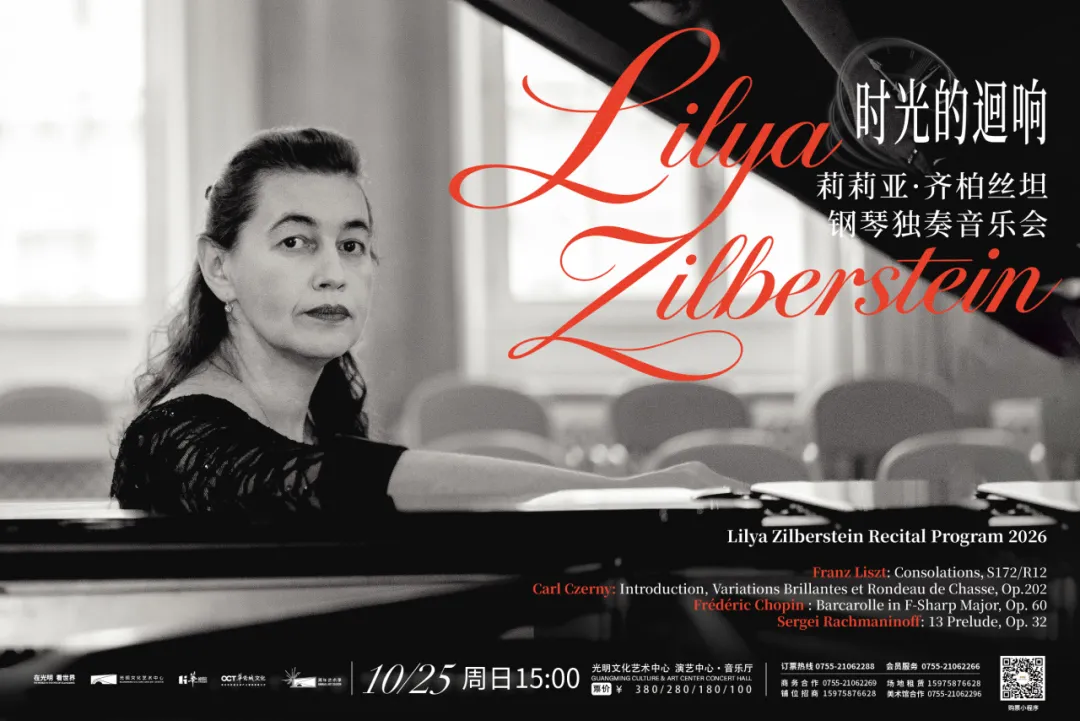
*The announcement directed readers to the poster for ticket purchases.
Echoes of Time—
Lilya Zilberstein Piano Recital
Performance Time
Sunday, October 25, 2026, at 15:00, local time in Shenzhen, China
Venue
Guangming Culture and Art Center
Performing Arts Center · Concert Hall
Duration
95 minutes, including a 15-minute intermission
Ticket Prices
RMB 380 / 280 / 180 / 100
Limited-Time Ticket Discount
The RMB 380 / 280 / 180 tiers were advertised at 20% off.
RMB 304 / 224 / 144 / 100
Membership Discount Policy
Membership discounts were accepted, with a limit of six tickets for this performance;
membership discounts could not be combined with early-bird discounts;
stored-value cards were accepted for payment;
birthday discounts were accepted, with a limit of four tickets.
Ticket-Purchase QR Code

Audience Information
*Recommended age: six and older.
*One ticket entitled one person to one seat.
Children 1.2 meters tall or taller required a ticket for admission.
Babies carried in arms were not admitted.
*Latecomers could enter between pieces during the first half,
but could not enter during the second half.
*Photography and video recording were prohibited during the performance.
PART.1
The Zilberstein Barrier
1987, the Busoni International Piano Competition in Italy.
The account describes most competitors as choosing stylistically similar works from a narrow period. Zilberstein, however, made a series of “rebellious” choices: her competition repertoire included Russian, German, French and Austrian composers, ranging from the nineteenth century to the 1920s and 1930s. Its breadth and force were astonishing.
In the first round, according to the account, she selected Beethoven’s Piano Sonata No. 3, Chopin’s Étude in Thirds and Taneyev’s Prelude and Fugue in G-sharp Minor, among other works. After her performance, several jurors reportedly asked her for a recording of the Prelude and Fugue, saying they “could not imagine such a difficult work being played so perfectly.”
From the second round through the final, she held nothing back: Brahms’s Six Piano Pieces, Schubert’s Piano Sonata in B Major, Brahms’s Variations on a Theme by Paganini, Debussy’s Images, Shostakovich’s Piano Sonata No. 1 and Prokofiev’s Piano Concerto No. 3…
(The accompanying video was described as a very rare recording
of Zilberstein performing on Soviet television in Moscow
after winning the Busoni Competition in 1987.)
Such a programme might have left another pianist feeling pulled in every direction.
The account reports that the final was broadcast across Europe that year. Zilberstein’s extraordinary command of each demanding work secured her the gold medal without dispute. Another five years passed before the first prize was awarded again. The article describes the jurors as instinctively measuring subsequent competitors against her, with no one reaching the same height.
This became known in the piano world as the “Zilberstein barrier.”
The article attributes the following generous praise to the “Queen of the Piano,” Martha Argerich:
“Lilya is a flawless pianist, with a natural, flowing way of playing—truly world-class! Fortunately, she did not compete in my year at Busoni; otherwise, winning would have been very difficult for me.”
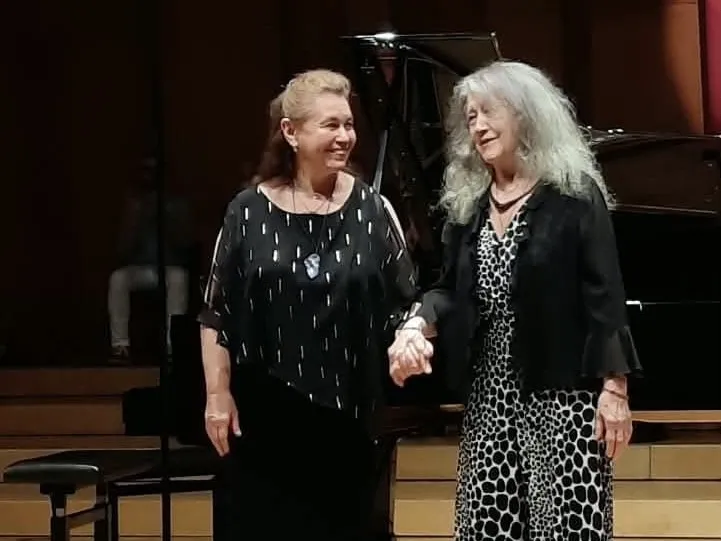
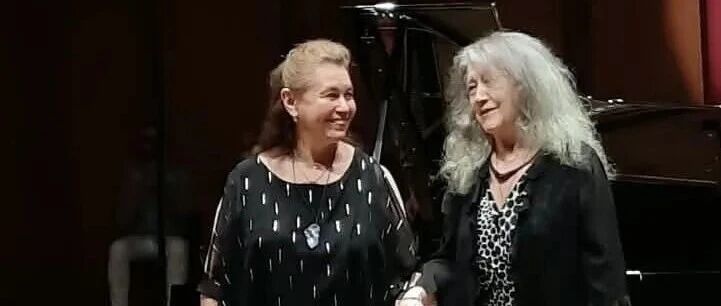
(The two friends had been performing together for 27 years by the time of this 2026 announcement.)
PART.2
“A Jewel Covered in Dust”
The Fate of a Jewish Pianist in the Former Soviet Union
Behind this “barrier,” however, lay a path strewn with thorns.
The biographical account portrays life in the former Soviet Union, where antisemitism was widespread, as leaving exceptionally gifted Jewish musicians like jewels covered in dust, unable to shine. Zilberstein was born in Moscow in 1965 and entered the Gnessin music school at six. With what the account calls a “photographic memory” and remarkable talent, she quickly became one of its finest pupils. She memorized scores rapidly; music seemed to flow from her by instinct.
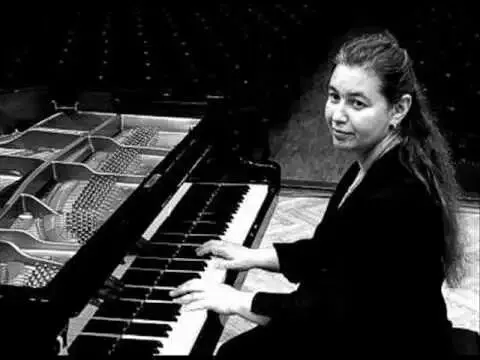
Yet at a crucial point, that gifted young musician’s path was abruptly blocked.
As she prepared to apply to the Moscow Conservatory, one of the Soviet Union’s leading music institutions, an interviewer reportedly saw her distinctly Jewish surname and told her there was no point in preparing: “You won’t get in anyway.” The article also says she could not even get onto domestic competition shortlists and had virtually no opportunity to make her mark.
Translator’s note: The claim that she could not enter domestic competitions conflicts with Zilberstein’s official biography, which records first prize in the Competition of the Russian Federation and a prize at the All-Union Competition in Riga in 1985.
More painfully still, the account says her performing career was held back across the board, preventing her from representing her country in competitions abroad. One juror reportedly offered her a private “solution”: marry and change her surname. At twenty, Zilberstein could scarcely believe what she was hearing. Marriage should rest on love; what would be the point of sacrificing marriage and freedom for fame?
She refused.
PART.3
“The Only Opportunity”
From Busoni to the Top of the World
The opportunity finally arrived in 1987.
According to the article, a place at the Busoni Piano Competition became available to Zilberstein after other contestants strategically withdrew because of scheduling conflicts and the distant location. Both she and her teacher regarded it as “the only opportunity.”
What followed was the performance that entered the history books.
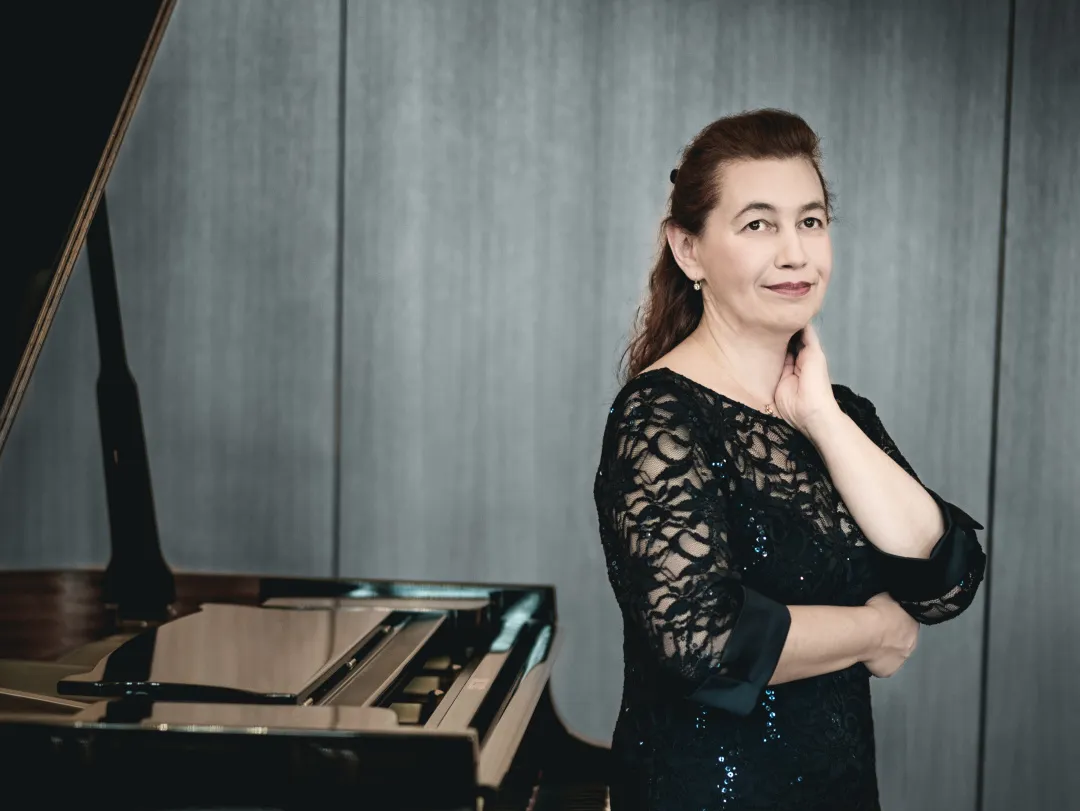
After her victory, her international career opened up. In 1991, under the baton of Claudio Abbado, Zilberstein made her debut with the Berlin Philharmonic, beginning a long association. She also performed with leading orchestras including the Chicago Symphony Orchestra, London Symphony Orchestra, Orchestra of La Scala in Milan and Staatskapelle Dresden. The conductors with whom she shared the stage included Gustavo Dudamel, Christoph Eschenbach and Semyon Bychkov.
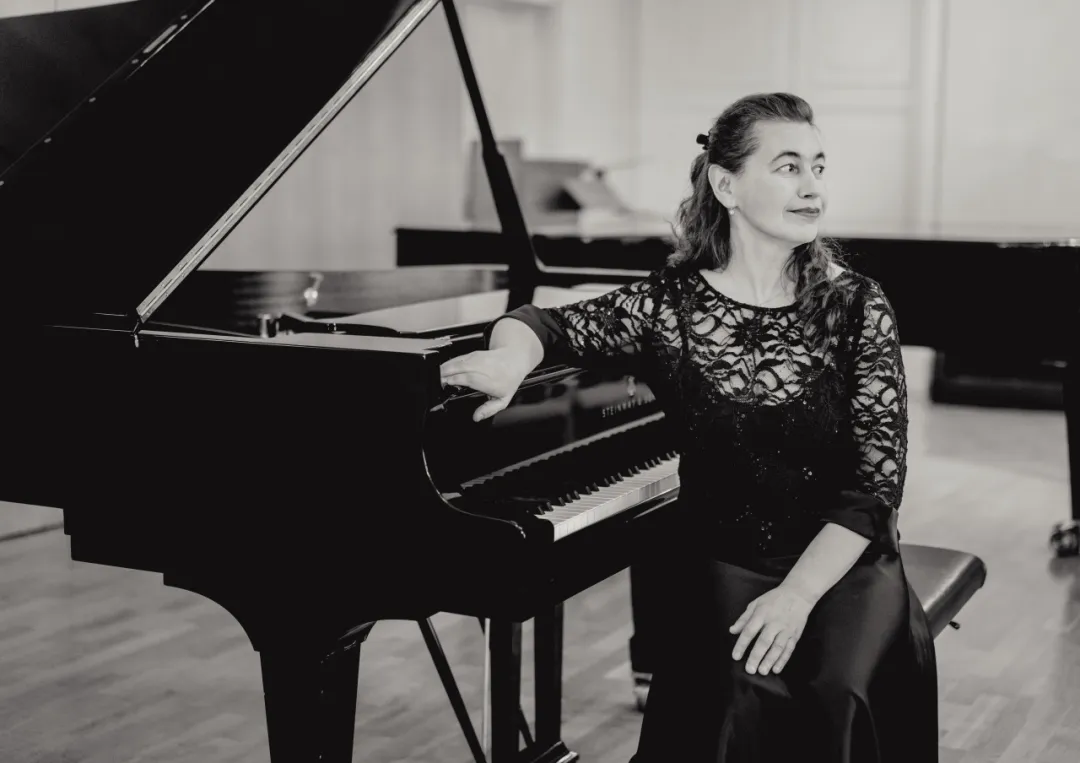
The article describes her as one of the few Russian pianists to maintain a long association with Deutsche Grammophon (DG). She recorded eight albums for the label, including solo works by Mussorgsky, Liszt, Schubert, Brahms and Debussy. She also contributed to DG’s first complete recording of Chopin’s works, released in 1999.
At the time of the announcement, she was a full-time professor at the University of Music and Performing Arts Vienna, succeeding the great pianist Paul Badura-Skoda at an institution ranked among the world’s leading universities for the performing arts.
PART.4
Echoes of Time
In 2026, the “Russian Piano Empress,” still an imposing presence in her sixties, was scheduled to bring Chinese audiences a carefully shaped Romantic programme—a musical conversation across time.
Romanticism encompasses more than brilliance and passion: it also reflects the inner world.
Liszt’s Six Consolations—
Quiet, meditative and songful. The composer remembered for dazzling virtuosity lays down his armour here, revealing his gentlest inner self.
Czerny’s Introduction, Brilliant Variations and Hunting Rondo—
A glittering miniature of nineteenth-century salon culture. This rarely heard large-scale virtuoso work is technically demanding and magnificent in scope. Czerny was both Beethoven’s pupil and Liszt’s teacher; the work thus links successive generations of the Romantic tradition.
Chopin’s Barcarolle in F-sharp Major—
The swaying of a Venetian gondola, its melody rippling like water. A late masterpiece by Chopin, it conceals yearning within elegance and depth within its flowing motion.
Rachmaninoff’s Thirteen Preludes—
The centrepiece of the second half. Intense, solitary, expansive and delicate—the soul of the Russian school burns brightly here.
This is more than a piano recital: it is a journey into the depths of the Romantic spirit.
PROGRAMME
Franz Liszt: Consolations, S. 172 / R. 12
Liszt: Six Consolations, S. 172 / R. 12
Carl Czerny: Introduction, Variations brillantes et Rondeau de chasse, Op. 202
Czerny: Introduction, Brilliant Variations and Hunting Rondo, Op. 202
Frédéric Chopin: Barcarolle in F-sharp Major, Op. 60
Chopin: Barcarolle in F-sharp Major, Op. 60
-Intermission-
Sergei Rachmaninoff: Thirteen Preludes, Op. 32
Rachmaninoff: Thirteen Preludes, Op. 32
October 25, 2026
Lilya Zilberstein was scheduled to appear at Guangming Culture and Art Center in Shenzhen, China.
The announcement invited audiences to attend in person
and hear the echoes of the Russian piano empress’s legendary playing.
The Shenzhen ticket giveaway’s deadline was
October 8, 2026, at 14:00, local time in China.